Sulfonamides and Trimethoprim- Sulfamethoxazole (TMP-SMX)
Russell E. Lewis
2026-07-20
Sulfonamides and Trimethoprim-Sulfamethoxazole: TMP-SMX
Russell E. Lewis, Pharm.D
Associate Professor of Infectious Diseases (MEDS-10/B)

russelledward.lewis@unipd.it
https://github.com/Russlewisbo
Slides and course materials: www.idpadova.com
Learning objectives (1 of 2)
By the end of this lecture, you should be able to:
- Describe the history and development of sulfonamides
- Explain the chemical structure-activity relationships of sulfonamides
- Describe the mechanism of action of sulfonamides and trimethoprim
- Explain the basis for synergy in TMP-SMX combination
Learning objectives (2 of 2)
- List the major mechanisms of resistance to sulfonamides and trimethoprim
- Describe the pharmacokinetics and tissue distribution
- Recognize common and serious adverse reactions
- Identify appropriate clinical indications for TMP-SMX
- Manage drug interactions and special populations
PART 1: History and Discovery
The birth of antimicrobial chemotherapy
- 1932: Gerhard Domagk discovers Prontosil
- First synthetic antimicrobial agent
- German dye industry origin
- Protected mice from Streptococcus pyogenes

Prontosil to sulfanilamide
- Prontosil was a prodrug
- Active metabolite: sulfanilamide
- Released in vivo through azo bond cleavage
- First use in US: July 1935
- 10-year-old girl with H. influenzae meningitis
- Unfortunately unsuccessful (too late in disease)
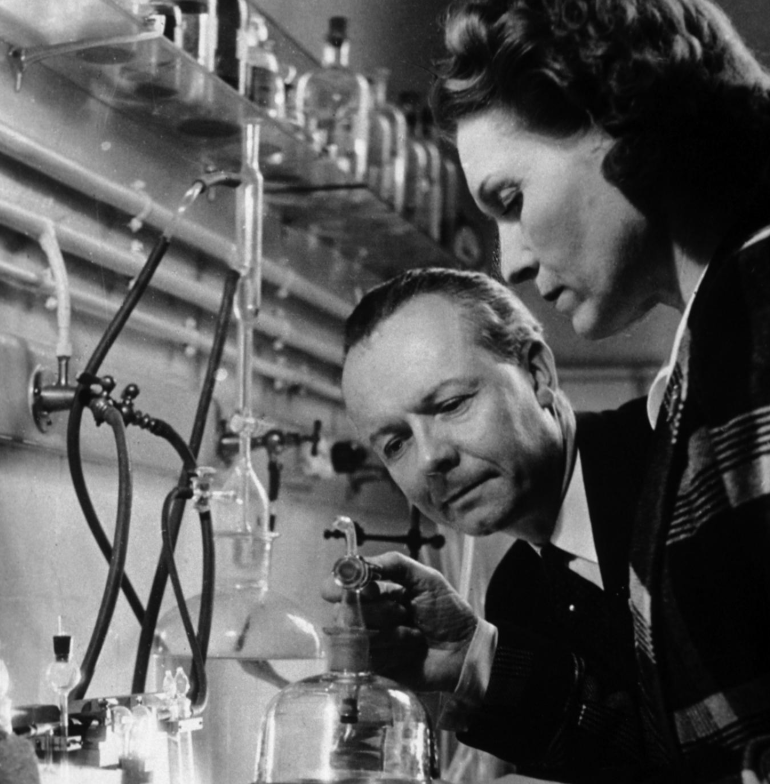
Evolution of sulfonamides
| Decade | Development |
|---|---|
| 1930s | Basic sulfanilamide modifications |
| 1940s | Sulfadiazine for systemic infections |
| 1950s | Trimethoprim synthesis (Hitchings) |
| 1960s | TMP-SMX combination introduced |
| 1970s+ | Prophylaxis for opportunistic infections |
PART 2:
Sulfonamide Chemistry and Structure
Sulfonamide structure basics
Key structural features:
- Benzene ring core
- Sulfonamide group (-SO₂NH₂)
- Free amino group at 4-carbon
- Similar to PABA
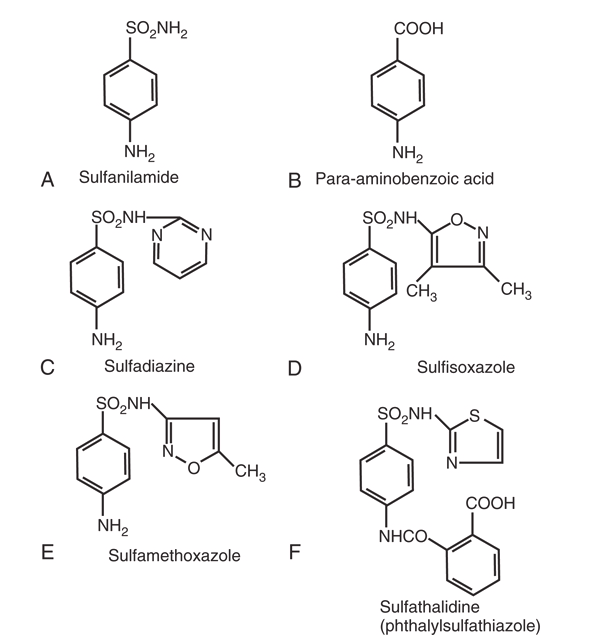
Structure-activity relationships
Activity-enhancing modifications:
- Free 4-amino group → Essential for activity
- Sulfonyl (SO₂) substitutions → Increased PABA inhibition
- Examples: sulfadiazine, sulfisoxazole, sulfamethoxazole
Activity-decreasing modifications:
- N-1 substitutions → Decreased GI absorption
Classification of sulfonamides
| Class | Examples | Key Features |
|---|---|---|
| Short/medium-acting | Sulfisoxazole, SMX | Most common, systemic |
| Long-acting | Sulfadoxine | T½ 100-230 hrs, malaria |
| GI-limited | Sulfasalazine | Poorly absorbed, IBD |
| Topical | Silver sulfadiazine | Burns, wounds |
Sulfamethoxazole: The most important
- N’-(5-methyl-3-isoxazolyl) sulfanilamide
- Less soluble than sulfisoxazole
- Higher blood levels achieved
- The sulfonamide in TMP-SMX
- Half-life ~11 hours (matches TMP)
PART 3: Mechanism of Action
The folic acid pathway
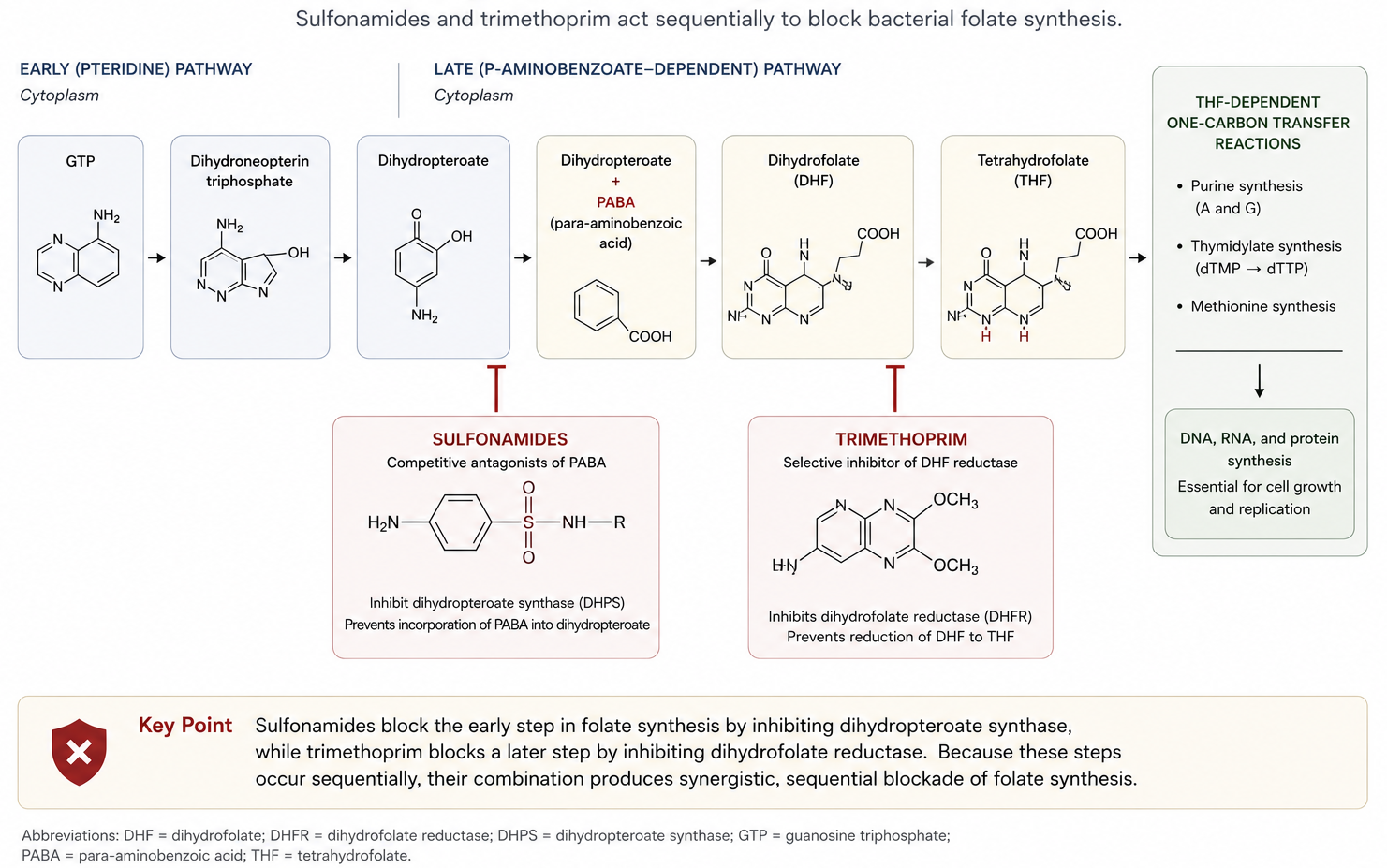
Step 1: Sulfonamide action
Target: Dihydropteroate synthase (DHPS)
- Sulfonamides are PABA analogs
- Competitive inhibition of PABA incorporation
- Can be incorporated into dihydropteroate
- Result: Decreased dihydrofolic acid synthesis
Step 2: Trimethoprim action
Target: Dihydrofolate reductase (DHFR)
- Blocks conversion of dihydrofolate → tetrahydrofolate
- 50,000-100,000x more active against bacterial vs human DHFR
- Selective toxicity is key
- Result: Decreased tetrahydrofolic acid
Sequential blockade = synergy
Key concept: Bacteriostatic vs bactericidal
| Property | Sulfonamide Alone | TMP Alone | TMP-SMX |
|---|---|---|---|
| Effect | Bacteriostatic | Bacteriostatic | Bactericidal |
| Inhibition | DHPS | DHFR | Both |
| Resistance | Higher risk | Higher risk | Lower risk |
Why humans are spared
Selective toxicity explained:
- Humans cannot synthesize folic acid
- Humans obtain folate from diet
- Human DHFR has very low affinity for TMP
- Mammalian cells take up preformed folate
Tip
High doses or prolonged therapy can still cause folate deficiency - supplement with leucovorin when needed
PART 4: Antimicrobial Spectrum and Resistance
Spectrum of activity
Gram-positive:
- S. aureus (including many CA-MRSA)
- S. pneumoniae (resistance increasing)
- Group A, B Streptococci (classically throught to be resistant-artifact of thymidine in test medium)
- Listeria monocytogenes
- Nocardia species
Gram-negative:
- Most Enterobacterales
- H. influenzae
- Stenotrophomonas maltophilia
- NOT Pseudomonas aeruginosa
Activity against special pathogens
| Organism | Activity | Clinical Use |
|---|---|---|
| Pneumocystis jirovecii | +++ | First-line |
| Toxoplasma gondii | ++ | Alternative |
| Nocardia spp. | +++ | First-line |
| Stenotrophomonas | +++ | First-line |
| Isospora/Cyclospora | +++ | First-line |
Resistance: The growing problem
Resistance rates are increasing:
- E. coli (UTI isolates): 20-30% resistant in many areas
- S. pneumoniae: 25-50% resistant globally
- Shigella: >30% resistant in US, >75% in China
- Salmonella: Majority of isolates now resistant
Warning
Always check local resistance patterns before empiric therapy!
Mechanisms of resistance-sulfonamides
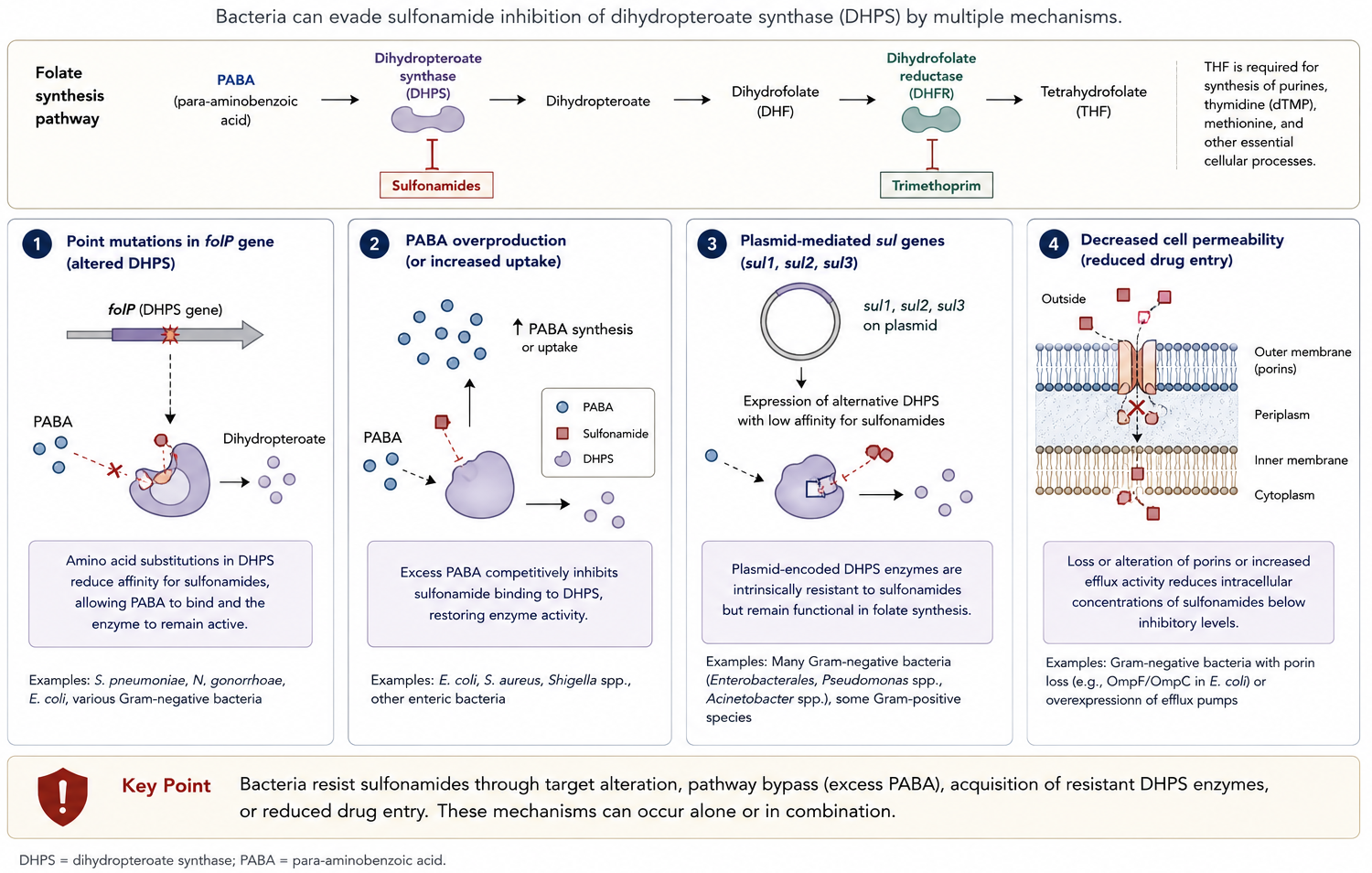
Mechanisms of resistance-trimethoprim (continued)
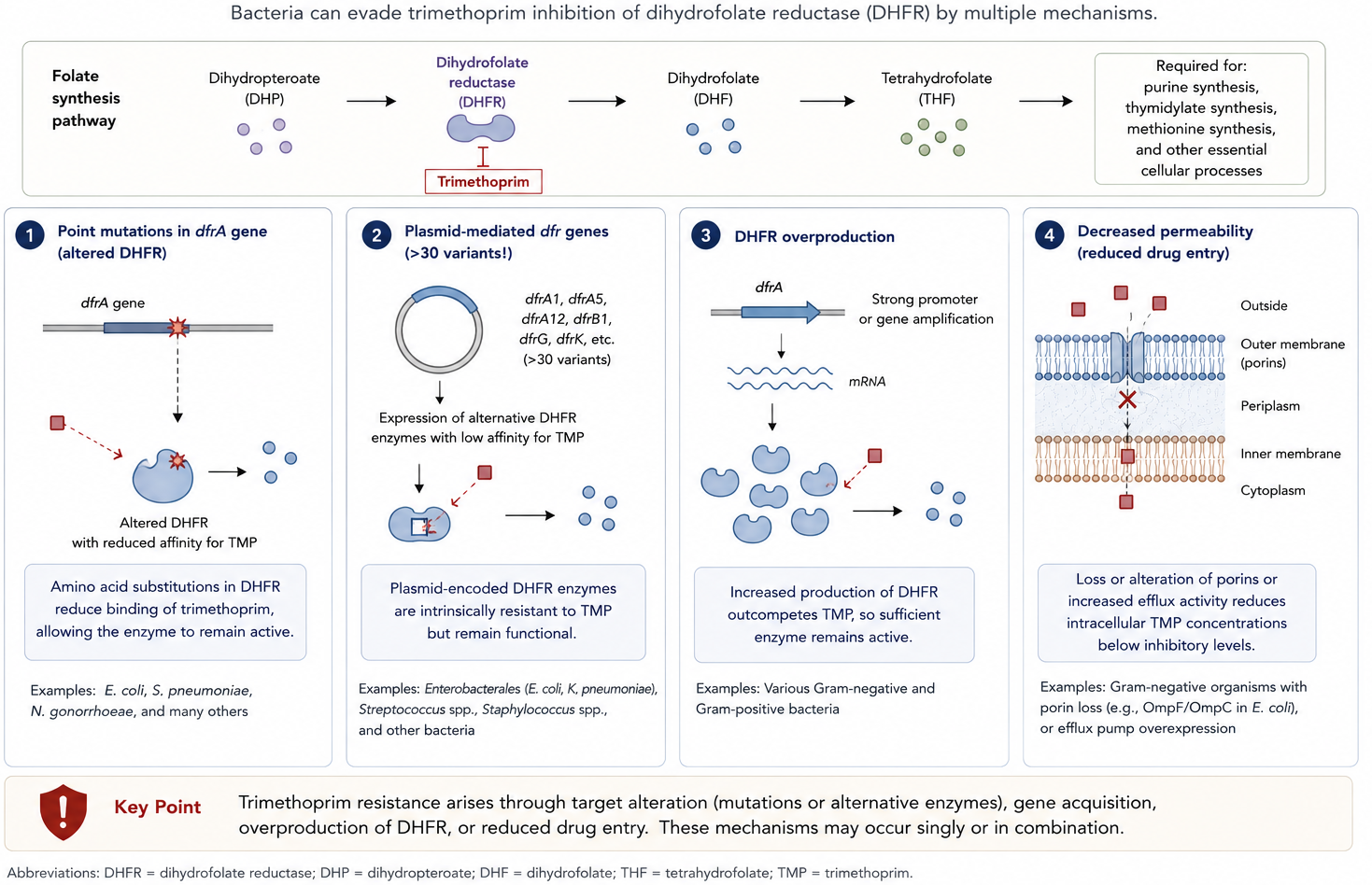
Important
Cross-resistance between sulfonamides is common; resistance to one = resistance to all
PART 5: Pharmacology
Pharmacokinetics overview
| Parameter | TMP | SMX |
|---|---|---|
| Bioavailability | >90% | >90% |
| Tmax | 1-4 hr | 1-4 hr |
| Half-life | 8-10 hr | 9-11 hr |
| Protein binding | 45% | 70% |
| CSF penetration | 40-50% | 25-50% |
The magic of the 1:5 ratio
Fixed-dose combination:
- TMP 160 mg + SMX 800 mg = DS tablet
- Produces serum ratio ~1:20
- Optimal for synergy against most pathogens
Why this ratio?
- Accounts for different protein binding
- Accounts for different tissue distribution
- Maximizes bactericidal synergy
IV to oral conversion & formulations
~90-100% oral bioavailability → convert IV to PO 1:1 (based on TMP)
| Formulation (EU / Italy) | TMP + SMX per unit | Common label / pack |
|---|---|---|
| IV infusion (fiala) | 16/80 mg per mL; 5 mL ampoule = 80/400 | “480 mg” |
| Tablet — standard (compresse) | 160/800 mg | “Bactrim forte” / 960 mg |
| Tablet — single strength | 80/400 mg | “480 mg” |
| Oral suspension (Italy) | 80/400 mg per 5 mL | 100 mL bottle |
Convert when: tolerating oral intake, hemodynamically stable, GI absorption intact
Always dose by the TMP component
TMP is the dose-limiting, dose-defining moiety. Prescribe and calculate mg/kg on TMP, not the combined product or the SMX. e.g. 15 mg/kg/day TMP for severe infections, divided q6-8h — the SMX follows the fixed 1:5 ratio.
Warning
EU vs US labelling trap: European/Italian products are labelled by the combined amount (“480 mg” = 80 TMP + 400 SMX), while US references dose by TMP alone. Always specify the TMP dose to avoid 5-fold errors.
Worked example: dosing by TMP
70 kg patient, Stenotrophomonas maltophilia pneumonia, normal renal function
- Choose target: 10 mg/kg/day of TMP → 70 × 10 = 700 mg TMP/day
- Divide q8h → ≈ 240 mg TMP per dose (700 ÷ 3, rounded to whole ampoules)
- Express in product units:
| Route | Per dose (q8h) | In “480 mg” units |
|---|---|---|
| IV | 3 ampoules (3 × 80 = 240 mg TMP) | 3 × 480 mg = 1440 mg |
| PO | 1.5 standard tablets (160 mg TMP each) | 1.5 × 960 mg |
Oral step-down uses the same TMP dose — no reduction for the switch.
Note
Note how the same regimen reads as “240 mg TMP q8h” (US style) or “1440 mg co-trimoxazole q8h” (EU style). Anchor on the TMP number and the two never conflict.
Per il contesto italiano
La scheda tecnica italiana (Bactrim perfusione) esprime la posologia sul totale cotrimossazolo, tipicamente come mg/kg di entrambi i componenti (es. 20 mg/kg/die di trimetoprim + 100 mg/kg/die di sulfametossazolo, in 3–4 fiale ogni 6 ore). In reparto ordinate in fiale da “480 mg” (80 mg TMP), ma calcolate e verificate sempre la dose sul trimetoprim per evitare errori di un fattore 5.
Tissue distribution
Excellent penetration into:
- Cerebrospinal fluid (40-50%)
- Prostatic tissue
- Respiratory secretions
- Middle ear fluid
- Synovial fluid
- Pleural and peritoneal fluids
Tip
Good CNS penetration makes TMP-SMX useful for: - Toxoplasmic encephalitis - Nocardia brain abscess
Metabolism and elimination
Trimethoprim:
- 50-70% excreted unchanged in urine
- Hepatic metabolism (minor)
- Active tubular secretion
Sulfamethoxazole:
- Hepatic acetylation and glucuronidation
- 15-30% excreted unchanged in urine
- Metabolized by CYP2C9
Renal dosing adjustments
| CrCl (mL/min) | Dose Adjustment |
|---|---|
| >30 | Full dose |
| 15-30 | 50% reduction |
| <15 | Avoid (or 50% q24h with monitoring) |
Hemodialysis: Give dose after dialysis
Warning
Monitor creatinine closely - TMP can increase serum creatinine by blocking tubular secretion (not true nephrotoxicity)
PART 6: Adverse Effects
Common adverse effects
Gastrointestinal (most common):
- Nausea, vomiting
- Anorexia
- Diarrhea
Dermatologic:
- Rash (3-5% general population)
- Much higher in HIV (50-60%)
- Usually maculopapular
Life-threatening reactions
- Stevens-Johnson Syndrome / TEN
- Mortality up to 30-40% for TEN
- Usually within first 8 weeks
- Severe hematologic toxicity
- Agranulocytosis
- Aplastic anemia
- Thrombocytopenia
- Anaphylaxis
Hyperkalemia: An underappreciated risk
Mechanism:
- TMP blocks ENaC sodium channel
- Acts like potassium-sparing diuretic
- Occurs at therapeutic doses
Risk factors:
- Renal insufficiency
- Age >65 years
- ACE inhibitors or ARBs
- Higher TMP doses
- Diabetes mellitus
Hyperkalemia management
| Potassium Level | Action |
|---|---|
| <5.5 mEq/L | Monitor |
| 5.5-6.0 mEq/L | Recheck, consider dose reduction |
| 6.0-6.5 mEq/L | Stop TMP-SMX, dietary K+ restriction |
| >6.5 mEq/L | Aggressive treatment, alternative antibiotic |
Tip
Check potassium within first week in high-risk patients!
Hematologic toxicity
Folate-related:
- Megaloblastic anemia
- Leukopenia
- Thrombocytopenia
- Risk increases with duration
Prevention:
- Supplemental leucovorin (folinic acid) for high-dose/prolonged therapy
- Especially important in malnourished patients
Special population: HIV patients
Much higher adverse reaction rates:
- Rash: 50-60% (vs 3-5%)
- Fever common
- Often occurs after 1-2 weeks
- May tolerate rechallenge or desensitization
Despite reactions, TMP-SMX remains:
- First-line PCP prophylaxis
- First-line PCP treatment
- Benefits outweigh risks
Pregnancy considerations
Avoid in late pregnancy
- Sulfonamides compete for bilirubin binding sites
- Risk of neonatal hyperbilirubinemia
- Kernicterus risk in newborn
- Also avoid in breastfeeding
First trimester:
- Some studies suggest neural tube defect risk
- Consider folate supplementation if used
PART 7: Drug Interactions
Major drug interactions
| Drug | Effect | Mechanism |
|---|---|---|
| Warfarin | ↑ INR | CYP2C9 inhibition |
| Methotrexate | ↑ Toxicity | Protein displacement, DHFR inhibition |
| Phenytoin | ↑ Levels | CYP2C9 inhibition |
| Sulfonylureas | ↑ Hypoglycemia | Protein displacement |
Drug interactions (continued)
| Drug | Effect | Management |
|---|---|---|
| ACEi/ARBs | ↑ Hyperkalemia | Monitor K+ |
| Dofetilide | ↑ QT prolongation | Contraindicated |
| Cyclosporine | ↓ Levels | Monitor |
| Digoxin | ↑ Levels | Monitor |
Important
TMP-SMX + Dofetilide = Absolute contraindication
PART 8: Clinical Applications
PCP: The most important indication
Pneumocystis jirovecii Pneumonia:
- Treatment: 15-20 mg/kg/day TMP, 21 days
- Prophylaxis: 1 DS tablet daily (or 3x/week)
- First-line for both
- Add steroids if PaO₂ <70 mmHg
Prophylaxis indications:
- HIV with CD4 <200 cells/µL
- Other immunocompromising conditions
- Solid organ transplant recipients
Urinary tract infections
Uncomplicated cystitis:
- 1 DS tablet BID × 3 days
- Only if local resistance <20%
Pyelonephritis:
- 1 DS tablet BID × 7-14 days
- If susceptible
Warning
Check your local antibiogram! Many areas now have E. coli resistance >20%
Skin and soft tissue infections
Community-acquired MRSA:
- TMP-SMX has good CA-MRSA activity
- 1-2 DS tablets BID × 5-10 days
- Often combined with I&D for abscesses
- Useful oral step-down option
Advantages:
- Oral bioavailability
- Good tissue penetration
- Often susceptible when other agents fail
The myth about TMP/SMX and lack of activity against Streptococci
The key issue was thymidine in culture media.
Streptococci can utilize exogenous thymidine.
Early susceptibility media often contained relatively high thymidine concentrations.
Because TMP/SMX inhibits tetrahydrofolate-dependent thymidylate synthesis, providing thymidine externally bypasses the drug’s mechanism.
The result was falsely elevated MICs and apparent resistance.
Modern CLSI-recommended media contain low thymidine concentrations (or thymidine phosphorylase is added), largely eliminating this artifact.
How do “appropriate” test conditions of TMP/SMX impact Streptococcus susceptibility?
Most isolates of:
- Streptococcus pyogenes (Group A Streptococcus)
- Streptococcus agalactiae (Group B Streptococcus) many β-hemolytic streptococci
…are actually susceptible in vitro when tested appropriately.
Nocardiosis
First-line therapy:
- TMP-SMX preferred
- High doses: 15-20 mg/kg/day TMP
- Duration: 6-12 months (or longer)
- May combine with other agents for severe disease
Alternative: Imipenem, amikacin, linezolid
Stenotrophomonas maltophilia
Often the only oral option:
- Intrinsic multidrug resistance
- TMP-SMX usually active
- Ceftazidime-avibactam + aztreonam or cefidericol may be preferrable in some populations
- Important for step-down therapy
Tip
Think about Stenotrophomonas in: - ICU patients on broad-spectrum antibiotics - Ventilator-associated pneumonia - Malignancy patients
Stenotrophomonas: dosing & the combination-therapy shift
Current dosing (non-cystitis)
- 8–12 mg/kg/day TMP, divided q8–12h
- Consider a max of ~960 mg/day TMP
- Cystitis: lower doses acceptable (high urinary levels)
The recent shift (Tamma et al. 2024)
- IDSA guidance now favors TMP-SMX as part of combination therapy, at least until clinical improvement
- Reflects doubt that an “S” on the report predicts monotherapy success
Why the caution? (Lasko et al. 2022)
- Breakpoints largely inherited from other species
- In vitro PK/PD: even ~20 mg/kg/day TMP failed to achieve stasis; up to the equivalent of 100 mg/kg/day could not reach 1-log kill
- Derived free AUC/MIC stasis target ≈ 67 — pushing the dose does not improve target attainment
- Murine models poorly translational (high rodent thymidine)
Important
First ask: colonizer or true pathogen? Steno agents are limited and often poorly tolerated — avoid treating culture results rather than disease.
Other clinical uses
| Infection | Dose | Duration |
|---|---|---|
| Toxoplasmosis | High-dose | 6+ weeks |
| Traveler’s diarrhea | 1 DS BID | 3-5 days |
| Isosporiasis | 1 DS QID | 10 days |
| Cyclosporiasis | 1 DS BID | 7-10 days |
| Listeria meningitis | High-dose IV | 3+ weeks |
PART 9: Practical Prescribing
Dosing summary
| Indication | Dose | Frequency | Duration |
|---|---|---|---|
| PCP prophylaxis | 1 DS | Daily or 3x/wk | Indefinite |
| PCP treatment | 15-20 mg/kg TMP | Q6-8h | 21 days |
| Uncomplicated UTI | 1 DS | BID | 3 days |
| SSTI | 1-2 DS | BID | 5-10 days |
| Nocardiosis | 15 mg/kg TMP | Divided | 6-12 mo |
Optimizing the dose: principles
Dose the trimethoprim component
- Fixed 1:5 TMP:SMX ratio for all formulations
- Express dose as mg/kg/day of TMP
- SS = 80 mg TMP; DS = 160 mg TMP
Indication drives the target
- GN bacteremia (step-down): ~5 mg/kg q12h
- CA-MRSA SSTI: ~5 mg/kg/day (1 DS BID most)
- Bone/joint: ~10 mg/kg/day
- PCP treatment: 15–20 mg/kg/day
Why “optimal” is hard
- No validated PK/PD index (unlike vanco AUC/MIC)
- Legacy targets extrapolated from 1970s–90s data
- Emerging PK data suggest lower PCP doses (<10 mg/kg/day) may retain efficacy with fewer ADEs (Butler-Laporte et al. 2020)
- IV formulation adds large fluid/D5W burden
Tip
Give an actual mg dose using the patient’s real weight rather than a weight-based formula — reduces transcription and math errors. Use the lowest effective dose and get creative with split dosing/timing with meals to improve tolerability.
Possible role of therapeutic drug monitoring
Rationale
- Wide interpatient PK variability
- Narrow therapeutic margin at high doses (PCP)
- Toxicities are largely dose/exposure-dependent (hyperkalemia, marrow suppression, GI, rash)
- No consensus PK/PD index → TDM remains investigational
What is measured
- Sulfamethoxazole peak most commonly reported
- Historical PCP peak target ~100–150 µg/mL (SMX), 1–2 h post-dose (Dao et al. 2014)
- Modern POPPK: SMX peak >100 mg/L & TMP >5 mg/L (efficacy); toxicity above SMX >200, TMP >15 mg/L (Leegwater et al. 2025)
- Trimethoprim levels measured less often; assays not widely available
Where TDM may help most
- High-dose/prolonged PCP treatment with poor tolerability
- Altered PK: obesity, augmented renal clearance, CRRT/dialysis, critical illness
- Difficult pathogens (e.g. Stenotrophomonas) where exposure–response is uncertain
Warning
TDM for TMP-SMX is not standardized — assay access, validated targets, and outcome data are limited. Use alongside clinical response, renal function, potassium, and CBC rather than as a stand-alone endpoint.
Desensitization protocols
When to consider:
- HIV patients needing PCP prophylaxis
- Previous mild-moderate reactions
- NOT for SJS/TEN history
Rapid 8-hour protocol:
- Escalating doses hourly
- Hospital setting with anaphylaxis capability
- Success rate ~70-80%
Contraindications
Absolute:
- Known hypersensitivity to sulfonamides or TMP
- History of SJS/TEN with sulfonamides
- Megaloblastic anemia from folate deficiency
- Severe hepatic or renal impairment
- Pregnancy at term (>32 weeks)
- Infants <2 months (except PCP)
Monitoring recommendations
| Parameter | Timing | Notes |
|---|---|---|
| CBC | Baseline, periodically | Cytopenias |
| Creatinine | Baseline, week 1 | May ↑ from TMP |
| Potassium | Week 1 | High-risk patients |
| LFTs | If prolonged use | Hepatotoxicity |
| INR | If on warfarin | Interaction |
PART 10: Clinical Cases
Case 1: PCP Prophylaxis
45-year-old man with HIV:
- CD4 count: 180 cells/µL
- No prior opportunistic infections
- Taking ART with good adherence
Question: What prophylaxis do you recommend?
Case 1: Answer
TMP-SMX 1 DS tablet daily (or 3x weekly)
Key points:
- CD4 <200 = indication for PCP prophylaxis
- TMP-SMX is first-line
- Continue until CD4 >200 for 3+ months on ART
- Also provides protection against toxoplasmosis
Case 2: UTI in 2025
28-year-old woman with uncomplicated cystitis:
- Dysuria, frequency × 2 days
- No fever
- Local E. coli TMP-SMX resistance: 35%
Question: Is TMP-SMX appropriate?
Case 2: Answer
No - local resistance too high
Better options:
- Nitrofurantoin 100 mg BID × 5 days
- Fosfomycin 3 g single dose
- If fluoroquinolone indicated: short course
Rule: TMP-SMX only if local resistance <20%
Case 3: Hyperkalemia risk
72-year-old man with cellulitis:
- History: DM2, CKD (CrCl 35), HTN
- Medications: lisinopril, metformin, spironolactone
- Started TMP-SMX DS BID for CA-MRSA cellulitis
What’s the concern?
Case 3: Answer
High hyperkalemia risk!
Risk factors present:
- Age >65 ✓
- CKD (CrCl 35) ✓
- ACE inhibitor ✓
- Spironolactone ✓
Management:
- Check baseline K+
- Recheck in 2-3 days
- Consider holding spironolactone during treatment
- Alternative antibiotic if K+ >5.5
Case 4: The rash
35-year-old HIV+ man on TMP-SMX prophylaxis:
- Day 10: develops diffuse maculopapular rash
- No mucosal involvement
- No systemic symptoms
- Tolerating oral intake
Options?
Case 4: Answer
Options to consider:
- Stop TMP-SMX and use alternative (dapsone, atovaquone)
- Continue with antihistamines (mild reactions may resolve)
- Plan for desensitization if alternative poorly tolerated
Red flags requiring immediate discontinuation:
- Mucosal involvement
- Systemic symptoms
- Blistering or desquamation
- Fever >38.5°C
Case 5: Drug interaction
68-year-old woman on warfarin for A-fib:
- INR therapeutic at 2.5
- Started TMP-SMX for UTI
- Returns 5 days later with INR 5.8
- No bleeding
What happened?
Case 5: Answer
TMP-SMX inhibits CYP2C9 → ↑ warfarin levels
Management:
- Hold warfarin
- Vitamin K 1-2 mg PO if significant bleeding risk
- Recheck INR in 24-48 hours
- Resume warfarin at reduced dose
- Always reduce warfarin when starting TMP-SMX
Summary and Key Takeaways
Key Points to Remember (1/2)
Mechanism: Sequential blockade of folate synthesis (DHPS + DHFR)
Synergy: Combination is bactericidal; components alone are bacteriostatic
Spectrum: Broad, but NOT Pseudomonas or anaerobes
Resistance: Increasing; always check local patterns for UTIs
Key Points to Remember (2/2)
PCP: First-line for both treatment and prophylaxis
Adverse effects: Higher in HIV; watch for SJS/TEN, hyperkalemia
Drug interactions: Warfarin, methotrexate, ACEi/ARBs
Contraindications: Late pregnancy, severe renal/hepatic impairment, SJS history
Dose optimization: Target the lowest effective TMP dose; emerging data support lower-dose PCP, and TDM (SMX peak) may help individualize therapy at PK extremes
When to Choose TMP-SMX
Excellent choice for:
- PCP (treatment and prophylaxis)
- Nocardiosis
- Stenotrophomonas
- CA-MRSA skin infections
- UTIs (if local susceptibility high)
Think twice if:
- High local resistance
- Multiple hyperkalemia risk factors
- Drug interactions (warfarin, MTX)
- Late pregnancy
References
Butler-Laporte, Guillaume, Elizabeth Smyth, Alexandre Amar-Zifkin, Matthew P. Cheng, Emily G. McDonald, and Todd C. Lee. 2020. “Low-Dose Trimethoprim-Sulfamethoxazole for the Treatment of Pneumocystis jirovecii Pneumonia: A Systematic Review and Meta-Analysis.” Open Forum Infectious Diseases 7 (5): ofaa112. https://doi.org/10.1093/ofid/ofaa112.
Dao, Betsy D., Jason N. Barreto, Robert C. Wolf, Ross A. Dierkhising, Matthew F. Plevak, and Pritish K. Tosh. 2014. “Serum Peak Sulfamethoxazole Concentrations Demonstrate Difficulty in Achieving a Target Range: A Retrospective Cohort Study.” Current Therapeutic Research 76: 104–9. https://doi.org/10.1016/j.curtheres.2014.08.003.
Lasko, Maxwell J., Matthew L. Gethers, Jennifer L. Tabor-Rennie, David P. Nicolau, and Joseph L. Kuti. 2022. “In Vitro Time-Kill and Pharmacodynamics of Trimethoprim-Sulfamethoxazole Against Stenotrophomonas maltophilia.” Antimicrobial Agents and Chemotherapy 66 (2): e0158321. https://doi.org/10.1128/AAC.01583-21.
Leegwater, Emiel, Lauren Baidjoe, Erik B. Wilms, et al. 2025. “Population Pharmacokinetics of Trimethoprim/Sulfamethoxazole: Dosage Optimization for Patients with Renal Insufficiency or Receiving Continuous Renal Replacement Therapy.” Clinical Pharmacology and Therapeutics 117 (1): 184–92. https://doi.org/10.1002/cpt.3421.
Tamma, Pranita D., Emily L. Heil, Julie Ann Justo, Amy J. Mathers, Michael J. Satlin, and Robert A. Bonomo. 2024. “Infectious Diseases Society of America 2024 Guidance on the Treatment of Antimicrobial-Resistant Gram-Negative Infections.” Clinical Infectious Diseases, ciae403. https://doi.org/10.1093/cid/ciae403.