Polymyxins
Russell E. Lewis, Pharm.D
Associate Professor of Infectious Diseases (MEDS-10/B)

russelledward.lewis@unipd.it
https://github.com/Russlewisbo
Slides and course materials: www.idpadova.com
Outline
- History — discovery, retirement, and the carbapenem-resistance renaissance
- Chemistry and mechanism — why charge matters
- Resistance — intrinsic, chromosomal, and the mcr revolution
- The CMS prodrug problem and modern PK/PD
- Dosing — loading doses, weight-based maintenance, the “polymyxin B over CMS” pivot
- Nephrotoxicity, neurotoxicity, and the pigmentation we don’t talk about
- Clinical use — CRE, CRAB, CRPA — and when not to use polymyxins
- Inhaled and intrathecal routes
- The AIDA trial, OVERCOME, and what monotherapy means in 2026
- Where polymyxins sit now that ceftazidime-avibactam, meropenem-vaborbactam, imipenem-relebactam, and cefiderocol are on the shelf
History
A case….
64-year-old liver transplant recipient, POD 14, develops shock and bacteremia. Cultures grow K. pneumoniae — KPC-3, ceftazidime-avibactam MIC 16 (resistant after 10 days of therapy), colistin MIC 1, meropenem MIC > 16. Creatinine has doubled from baseline
- What do you recommend?
- What dose?
- Mono or combination?
- Inhaled component?
Discovery and first retirement
- Isolated in 1947 from Paenibacillus polymyxa (originally Bacillus polymyxa) — concurrent reports by Stansly, Benedict, Brownlee, and Bushby
- Five polymyxin variants (A–E) initially described; only polymyxin B and polymyxin E (colistin) advanced to clinical use
- Widely used through the 1960s for Gram-negative infection
- Largely abandoned in the 1970s as aminoglycosides and later β-lactams proved more effective and less nephro/neurotoxic
- Survived in topical preparations (Polysporin, ear/eye drops) and SDD regimens
The carbapenem-resistance renaissance
- Emergence of carbapenem-resistant Pseudomonas, Acinetobacter, and Enterobacterales (KPC, NDM, OXA-48) starting in the 2000s reopened the door
- Polymyxins became drugs of last resort — often the only remaining IV option for KPC-producing K. pneumoniae and CR-A. baumannii
- Modern era: PK/PD reinvestigation revealed the field had been dosing colistin incorrectly for decades
- Now partially displaced by ceftazidime-avibactam, meropenem-vaborbactam, imipenem-relebactam, and cefiderocol — but still in active use where these are unavailable or not indicated
Chemistry and mechanism
Chemistry — cyclic cationic cipopeptides
- Cyclic decapeptide with a fatty acid tail (6-methyloctanoic or 6-methylheptanoic acid)
- Five positively charged α,γ-diaminobutyric acid (Dab) residues at physiologic pH
- Polymyxin B vs. colistin (polymyxin E) differ by a single amino acid (D-phenylalanine vs. D-leucine at position 6) — minor structural difference, major clinical difference
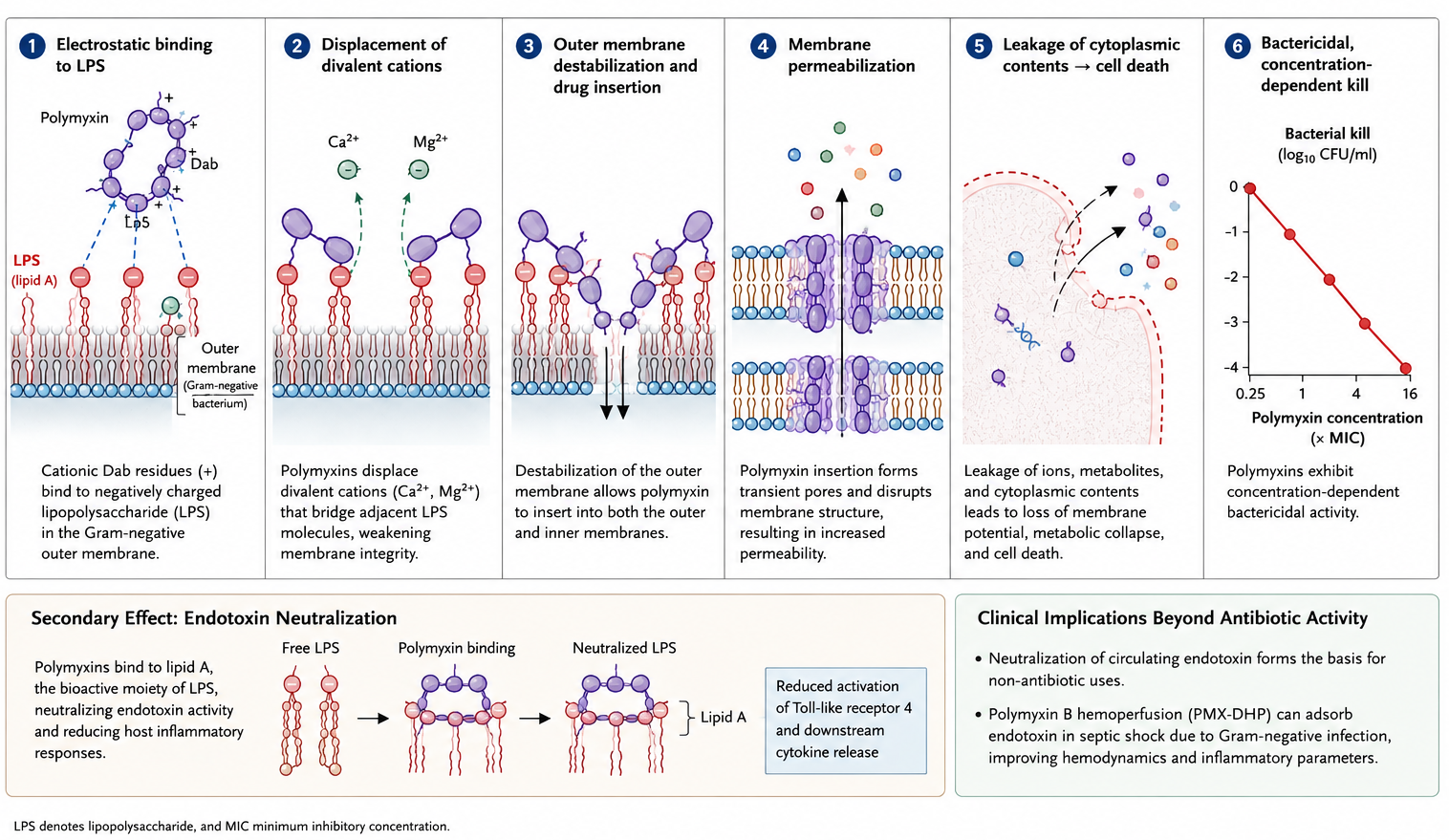
- Amphipathic structure → interacts with negatively charged Gram-negative outer membrane
- Colistimethate sodium (CMS) is the inactive methanesulfonate prodrug of colistin — formed by reacting colistin with formaldehyde and sodium bisulfite to mask the cationic charge and reduce toxicity
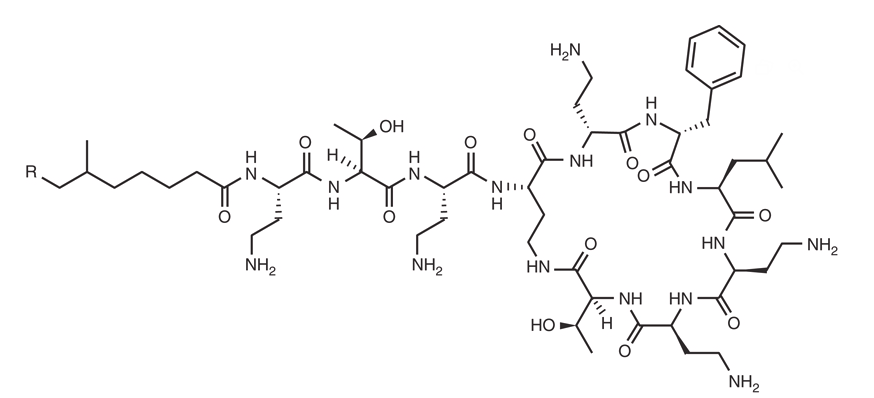
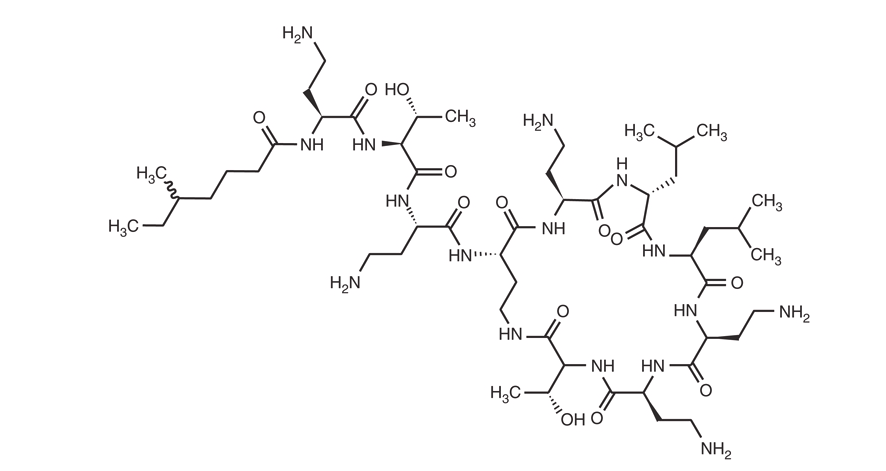
Mechanism of action — Electrostatic disruption
Spectrum at a glance
- Active: most Gram-negative bacilli — E. coli, Klebsiella, Enterobacter, Salmonella, Shigella, Pseudomonas aeruginosa, Acinetobacter baumannii, Stenotrophomonas (limited)
- Intrinsically resistant: Proteus, Providencia, Morganella, Serratia (modified lipid A), Burkholderia cepacia, all Gram-positive bacteria, anaerobes, Neisseria, Brucella, Helicobacter
- Not used against: any organism with a β-lactam alternative — toxicity is rarely worth it
Resistance
Resistance overview
- Three mechanisms of acquired polymyxin resistance:
- Modification of lipid A to reduce its net negative charge — the dominant mechanism
- Capsule and outer membrane protein changes
- Efflux
- Plasmid-mediated mcr genes added a fourth mechanism in 2015 — and made colistin resistance horizontally transferable
Lipid A modification — The charge story
- Polymyxins bind lipid A through electrostatic attraction to negatively charged phosphate groups
- Bacteria modify lipid A by adding:
- 4-amino-4-deoxy-L-arabinose (L-Ara4N) — neutralizes one phosphate
- Phosphoethanolamine (pEtN) — adds a positive charge
- Net effect: outer membrane becomes less negatively charged → drug binds less avidly
- Regulated chromosomally via PmrAB and PhoPQ two-component systems
- Constitutive activation of these regulons → high-level polymyxin resistance
PmrAB and PhoPQ — The regulatory nub
- Two-component systems that sense environmental stress (low Mg²⁺, low pH, sub-MIC polymyxin)
- Activated regulons upregulate the arn operon (L-Ara4N addition) and eptA (pEtN addition)
- Constitutive activation by mutation in pmrB or phoQ → high-level polymyxin resistance
- Same regulators control virulence genes in Salmonella and K. pneumoniae — there are fitness costs to resistance
- Single AA substitutions in PmrB or PhoQ are sufficient for clinical resistance
mcr — Plasmid-mediated polymyxin resistance
- 2015 (Liu, Lancet Infect Dis): mcr-1 discovered in E. coli from Chinese livestock and humans — first plasmid-mediated colistin resistance gene
- Encodes a phosphoethanolamine transferase (homologue of chromosomal eptA) that modifies lipid A
- Horizontally transferable on IncX4, IncI2, and IncHI2 plasmids
- Now identified globally; mcr-1 through mcr-10 variants described
- Frequently co-located with carbapenemase genes (NDM, OXA-48, KPC) — pan-resistant organisms now reported
mcr — The timeline
| Year | Variant | First report | Notable feature |
|---|---|---|---|
| 2015 | mcr-1 | China, E. coli (livestock + human) | First plasmid-mediated colistin resistance |
| 2016 | mcr-2 | Belgium, E. coli | Variant on IncX4 plasmid |
| 2017 | mcr-3 | China, E. coli | High-prevalence emergence |
| 2017 | mcr-4 | Italy, Salmonella | First non-E. coli host |
| 2017 | mcr-5 | Germany, Salmonella | |
| 2018–24 | mcr-6 to mcr-10 | Global | Multiple host species |
Heteroresistance
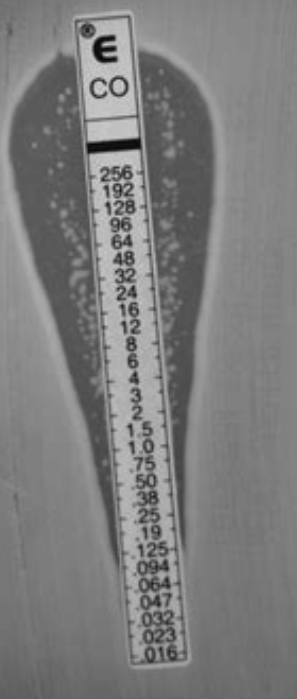
- Heteroresistance: an isolate appears susceptible by routine AST but contains a small subpopulation (often <1%) of resistant cells
- Under polymyxin selection pressure, the resistant subpopulation expands → rapid emergence of resistance during therapy
- Particularly well-documented in A. baumannii and K. pneumoniae
- Implication: polymyxin monotherapy carries a real risk of within-patient resistance emergence — one of the arguments for combination therapy
- Difficult to detect with routine methods — population analysis profile (PAP) testing is the gold standard
Susceptibility testing — A mess
- Broth microdilution is the only validated method — disk diffusion and gradient strips perform poorly for polymyxins
- Polymyxins adsorb to plastic and polystyrene in standard MIC plates → falsely elevated MICs
- Solution: polysorbate-80 added to broth, or use of specific polymyxin reference panels
- Breakpoint debate: EUCAST and CLSI use susceptible ≤2 mg/L; recent USCAST recommendation abandons “susceptible” entirely — only “intermediate” (≤2) and “resistant” (≥4)
- Practical: an “S” colistin result is not a guarantee — combine with PK considerations
Pharmacology —
The CMS Prodrug Problem
Two drugs, Two pharmacokinetic stories
| Property | Polymyxin B | Colistin (as CMS) |
|---|---|---|
| Administered as | Active drug | Inactive prodrug (CMS) |
| Active species formation | Immediate | Slow hydrolysis to colistin in blood |
| Renal elimination | Mostly non-renal | Active drug ~70% non-renal; CMS ~70% renal |
| Renal dose adjustment | No (or minimal) | Yes (CMS, not colistin) |
| Urinary concentration | Low (not good for UTI) | High via CMS hydrolysis in urinary tract |
| PK predictability | Better | Worse (variable CMS conversion) |
CMS — The prodrug trap
- Colistimethate sodium (CMS) is colistin with each of its 5 primary amines methanesulfonylated → inactive
- In aqueous solution, CMS spontaneously hydrolyzes to a mixture of partially-methanesulfonylated species and free colistin
- Hydrolysis is slow and incomplete in vivo — only ~30% of an administered CMS dose appears as colistin in blood
- At steady state, plasma colistin Cmax ≈ 2–3 mg/L on standard doses — barely at the MIC of many MDR organisms
- A second dose unit problem: CMS is dosed as IU or “mg colistin base activity” (CBA) — frequent unit-conversion errors
CMS Dosing Units — The unit confusion
- CMS is sold in multiple unit conventions:
- International Units (IU)
- Milligrams of colistimethate sodium (mg CMS)
- Milligrams of colistin base activity (mg CBA)
- 1 million IU CMS ≈ 80 mg CMS ≈ 30 mg CBA
- US labels typically use CBA; European labels use IU
- Medication errors — including fatal under- and over-dosing — have been attributed to unit conversion mistakes
- Always verify which unit your hospital’s label uses before prescribing or verifying a colistin order
Loading dose — The Garonzik/Nation insight
- Population PK work by Garonzik 2011 and Nation 2017 established that without a loading dose, colistin steady-state plasma concentrations are not reached for 2–3 days — too slow for serious infection
- Loading dose recommendation:
- 300 mg CBA (9 million IU CMS) IV as a single dose
- or weighted by total body weight: 5 mg CBA/kg up to maximum 300 mg
- Maintenance: 300 mg CBA/day in divided doses, adjusted for renal function
- Critically ill patients require the loading dose — failing to give it virtually guarantees subtherapeutic concentrations during the first 48 hours
Colistin dosing — A practical walkthrough
For a critically ill 70-kg patient with normal renal function:
- Loading dose: 300 mg CBA IV over 1 hour (or 9 MIU CMS)
- First maintenance dose: start 12 hours after loading dose
- Maintenance: 150 mg CBA q12h (= 300 mg CBA/day, divided)
- Adjust for renal function based on CrCl — Nation 2017 table
- Re-dose for CRRT: 440 mg CBA/day in divided doses (high clearance)
- Target plasma steady-state concentration: ≥ 2 mg/L for MIC 2, ≥ 4 mg/L for MIC 4 — often unattainable safely
Polymyxin B dosing
- Polymyxin B is given as the active drug — no prodrug delay
- Loading dose: 2.0–2.5 mg/kg IV over 1 hour
- Maintenance: 1.25–1.5 mg/kg q12h
- Generally no renal dose adjustment — non-renal clearance dominates
- Preferred over CMS for most systemic indications in the 2019 International Consensus Guidelines — more predictable PK, possibly less nephrotoxicity
- Exception: UTI — polymyxin B does not achieve adequate urinary concentrations; CMS is preferred for upper UTI
Renal dose adjustment — Colistin only
| CrCl (mL/min) | CMS daily dose (mg CBA) | Frequency |
|---|---|---|
| > 90 | 300 | divided q12h |
| 50–89 | 270 | divided q12h |
| 30–49 | 240 | divided q12h |
| 10–29 | 180 | divided q12h |
| < 10 (no HD) | 100 | once daily |
| HD | 60–80 + supplement post-HD | once daily + HD-day boost |
| CRRT | 440 | divided q8–12h |
PK/PD — AUC/MIC is the target
- Concentration-dependent killing with significant post-antibiotic effect
- Free drug AUC/MIC is the primary PK/PD index
- Target: fAUC/MIC ≈ 12–20 for stasis or 1-log kill against most isolates
- At standard doses against an organism with MIC 2 mg/L, target may not be achievable
- Pulmonary epithelial lining fluid concentrations of colistin are poor with IV CMS — argues for inhaled colistin in pneumonia
- Bone, CSF, prostate, eye: poor penetration
Adverse Effects
Nephrotoxicity — The big one
- Incidence: 30–60% across modern cohort studies
- Mechanism: polymyxin uptake by megalin-mediated proximal tubular reabsorption → tubular cell damage
- Risk factors:
- Higher cumulative dose / higher plasma levels (trough > 2.4 mg/L predicts AKI)
- Baseline renal dysfunction
- Concomitant nephrotoxins (vancomycin, aminoglycosides, IV contrast, NSAIDs)
- Higher daily dose × longer duration
- Usually reversible with discontinuation
- Frequently dose-limiting — the reason “use just a little longer” rarely helps in non-responders
Trough-level monitoring — Why it’s hard
- Therapeutic drug monitoring is not routinely available in most clinical labs
- LC-MS/MS required; turnaround days not hours
- Target trough ≤ 2.4 mg/L to minimize AKI risk (Sorli 2013)
- Target plasma steady-state concentration ≥ 2 mg/L for efficacy against MIC 2 mg/L (Garonzik)
- These targets overlap — the therapeutic window is essentially zero
- A few academic centers in Europe and US offer TDM; most clinicians dose by weight and renal function alone
Neurotoxicity
- Paresthesias (perioral, peripheral) — most common, dose-related, usually mild
- Ataxia, dizziness, vertigo
- Neuromuscular blockade — potentiates non-depolarizing blockers; rare respiratory paralysis reported with high-dose IV
- Generally reversible
- Inhaled polymyxins: bronchospasm rather than systemic neurotoxicity
CMS storage and stability
- Powder vials: stable at room temperature
- Reconstituted CMS in saline: stable refrigerated for limited periods (manufacturer typically states 24 hours)
- Spontaneous hydrolysis to colistin continues in solution — bag age = more active drug = more local toxicity on infusion
- Premix policy: mix immediately before each dose where feasible
- IV bags hung > 24 hours should be discarded — both efficacy (oxidative degradation) and toxicity (formed colistin) concerns
Drug interactions
- Other nephrotoxins — vancomycin, aminoglycosides, IV contrast, NSAIDs, calcineurin inhibitors — additive AKI risk
- Non-depolarizing neuromuscular blockers — polymyxins potentiate; prolonged paralysis reported
- No CYP-mediated interactions of clinical significance
- No QT prolongation — a rare oasis among antibiotics
- Premix instability — do not premix CMS in IV bags more than 24 hours before use; hydrolysis to active colistin in the bag increases toxicity
Skin hyperpigmentation — The polymyxin B quirk

- Diffuse skin and head/neck darkening reported specifically with polymyxin B
- Onset typically within first weeks of therapy- higher incidence in transplant patients
- Histology: dermal melanophages with melanin deposition
- Reversible over months after discontinuation
- Mechanism poorly understood; may involve histamine release and inflammatory cytokine-driven melanocyte activation
- Not seen with colistin to the same degree
- Important to counsel patients before initiating polymyxin B
Clinical Use
Time-to-effective therapy
- For MDR Gram-negative bacteremia, each hour of delay in effective antibiotic therapy is associated with measurable mortality increase
- Empirical polymyxin coverage may be warranted when:
- Prior MDR colonization or recent CR-Gram-negative infection
- Local CR rates > 20% among likely pathogens
- Sepsis or septic shock with high pretest probability of MDR organism
- De-escalate within 48–72 h once susceptibilities allow — empirical use must be time-limited
- The Tsuji 2019 guidelines emphasize early adequate dosing (loading dose) over delayed perfect dosing
When polymyxins are considered
- Carbapenem-resistant Enterobacterales (CRE) — KPC, NDM, OXA-48 producers without availability of newer β-lactam/inhibitors
- Carbapenem-resistant A. baumannii (CRAB) — limited alternatives; cefiderocol, sulbactam-durlobactam now competing
- Carbapenem-resistant P. aeruginosa (CRPA) — competing with ceftolozane-tazobactam, ceftazidime-avibactam, imipenem-relebactam, cefiderocol
- MDR Stenotrophomonas — limited supportive data; TMP-SMX remains first-line
- Empiric coverage for septic patient with prior MDR Gram-negative colonization
Pediatric considerations
- Pediatric data are sparse — most dosing extrapolated from adult studies
- Loading dose: 4 mg CBA/kg colistin (max 300 mg) suggested for children with serious infection
- Maintenance: 5–7.5 mg CBA/kg/day in divided doses, renal-adjusted
- Polymyxin B: 1.5–2.5 mg/kg/day divided q12h
- Inhaled colistin widely used in pediatric CF (Ratjen et al.)
- Nephrotoxicity rates may be lower in children — but data sparse
Pregnancy and breastfeeding
- Pregnancy category C for both polymyxin B and colistin
- Animal data inconclusive; human data limited to case reports
- Use only when no safer alternative exists for life-threatening MDR Gram-negative infection
- Cross placenta; potential for fetal renal exposure
- Breast milk transfer minimal but oral bioavailability of polymyxins is negligible — relevant exposure unlikely
- Document risk-benefit discussion explicitly
Carbapenem-resistant enterobacterales
- First-line in 2026 (where available): β-lactam/inhibitor combinations active against the carbapenemase
- KPC: ceftazidime-avibactam, meropenem-vaborbactam, imipenem-relebactam
- OXA-48: ceftazidime-avibactam
- NDM: ceftazidime-avibactam + aztreonam, or cefiderocol
- Polymyxin role: salvage when newer agents unavailable, contraindicated, or when isolate also resistant to them (e.g., emergent ceftazidime-avibactam resistance in KPC-3 variants)
- Increasingly the second drug of last resort, not the first
Carbapenem-Resistant Acinetobacter baumannii (CRAB)
- Historically: colistin ± meropenem ± tigecycline ± ampicillin-sulbactam
- Sulbactam-durlobactam (2023, FDA-approved): first agent designed specifically for CRAB; superior to colistin in the ATTACK trial
- Cefiderocol active in vitro against most CRAB but inconsistent clinical performance
- High-dose ampicillin-sulbactam still has a role
- Combination therapy historically standard; recent trials (AIDA, OVERCOME, Kaye 2023) challenge the necessity
Synergy testing — Mostly unhelpful clinically
- In vitro synergy between colistin and many partners (carbapenems, rifampin, fosfomycin, tigecycline) demonstrated repeatedly
- Methods: checkerboard, time-kill, E-test crossing
- Problem: in vitro synergy does not reliably predict in vivo benefit (AIDA, Kaye 2023 are the clearest disproof)
- Synergy testing is not standardized, not endorsed by CLSI/EUCAST/USCAST for clinical decision-making
- Should not delay therapy or anchor treatment selection
- Reserve for truly pan-resistant isolates where every option is empirical
Sulbactam-durlobactam — The new standard for CRAB
- β-lactam + diazabicyclooctane β-lactamase inhibitor combination, FDA-approved 2023
- Sulbactam has intrinsic activity against PBP3 of A. baumannii; durlobactam protects sulbactam from class A, C, and D β-lactamases
- ATTACK trial (Kaye 2023, Lancet ID): sulbactam-durlobactam non-inferior to colistin for CRAB pneumonia/bacteremia, with substantially less nephrotoxicity (12% vs. 38%)
- 28-day mortality similar; secondary outcomes favored sulbactam-durlobactam
- Where available, preferred over polymyxin for CRAB
- Cost and availability limit global access — polymyxin remains the default in much of the world
Carbapenem-resistant Pseudomonas aeruginosa
- First-line in 2026: newer agents
- Ceftolozane-tazobactam (most CRPA isolates not carbapenemase-mediated)
- Ceftazidime-avibactam
- Imipenem-relebactam
- Cefiderocol
- Polymyxin role: XDR strains resistant to newer agents; consider in combination
- Inhaled colistin: adjunct for ventilator-associated pneumonia
- The “use the new β-lactams first” pivot is even stronger for CRPA than CRE
Combination Therapy
The old Argument for combinations
- Polymyxin monotherapy:
- Sub-MIC at the achievable AUC for many “susceptible” isolates
- High risk of within-patient emergence of resistance (heteroresistance → constitutive resistance)
- Therapy failure rates concerning in observational series
- Combinations proposed:
- Colistin + meropenem (synergy in vitro despite carbapenem resistance — Bergen)
- Colistin + rifampin
- Colistin + tigecycline
- Colistin + fosfomycin
- In vitro synergy and clinical benefit appeared to track in observational data
AIDA — Paul 2018
Open-label RCT, 406 patients, severe CR-Gram-negative infections (mostly Acinetobacter, some Enterobacterales and Pseudomonas)
Colistin alone vs. colistin + meropenem
Primary endpoint: clinical failure at 14 days
Result: no difference in clinical failure (79% colistin alone vs. 73% combination, p = 0.17)
No difference in 28-day mortality
Combination arm: more nephrotoxicity
Conclusion: routine colistin + meropenem combination does not improve outcomes and may increase harm
Kaye 2023 — OVERCOME-like NEJM Evidence Trial
Multicenter RCT, 464 patients with CR-Gram-negative infections (mostly CRAB)
Colistin alone vs. colistin + meropenem
Mortality at 28 days: no significant difference
Clinical cure: no significant difference
Combination arm: more nephrotoxicity and more antibiotic exposure
Confirmed AIDA’s findings in a separate cohort
So — mono or combination?
- For CRAB and Enterobacterales: RCT evidence (AIDA, Kaye 2023) does not support routine combination with carbapenem
- Combinations may still have a role: when polymyxin MIC is at or above the breakpoint, when source control is delayed, in pneumonia with poor lung penetration
- Combination with newer agents (ceftazidime-avibactam + colistin in salvage settings) is observational only
- Default in 2026: if a newer β-lactam works, use it as monotherapy; if you must use a polymyxin, use it alone unless a specific reason exists to combine
Cefiderocol — The siderophore cephalosporin
- Catechol siderophore moiety hijacks bacterial iron transport (TonB-dependent receptors) → bypasses outer membrane permeability barriers
- Active against most CRE (including NDM), CRPA, CRAB, Stenotrophomonas
- CREDIBLE-CR (Bassetti 2021): mortality numerically higher in cefiderocol arm vs best available therapy in nosocomial pneumonia — unexplained signal
- APEKS-NP (Wunderink 2021): non-inferior to high-dose meropenem in nosocomial pneumonia
- Use as monotherapy for severe MDR Gram-negative infection where active; preferred over polymyxin where availability and cost permit
- Mixed adoption — the CREDIBLE-CR mortality signal made some centers cautious
Inhaled and intrathecal routes
Inhaled polymyxins
- CMS aerosolized via vibrating-mesh or jet nebulizer
- Long-standing use in cystic fibrosis for chronic P. aeruginosa colonization (Ratjen)
- Adjunctive role in ventilator-associated pneumonia caused by MDR Gram-negatives — Lu 2012 demonstrated efficacy of high-dose nebulized colistin
- Dosing (CF, EMA insert): 1–2 MIU (33–66 mg CBA) three times daily for ≥2 years
- VAP adjunct dosing: highly variable; 75–150 mg CBA q12h commonly used
- Premix only immediately before nebulization (bronchoconstriction risk; CMS hydrolysis in vitro)
Inhaled colistin — practical notes
- Use vibrating-mesh nebulizer (more efficient, less drug loss) where available
- Premix only immediately before nebulization — formed colistin in standing solution causes bronchospasm and increases toxicity
- Pretreat with short-acting β2-agonist to prevent bronchoconstriction
- Monitor for bronchospasm, cough, dyspnea
- Systemic absorption from inhaled CMS is real but minor — does not substitute for IV therapy in pneumonia
- Role in VAP: adjunct only; meta-analyses suggest modest microbiologic benefit, uncertain clinical impact
Intrathecal / Intraventricular Polymyxin
- For CSF shunt and external ventricular drain infections with multidrug-resistant Gram-negative pathogens
- Polymyxin penetrates CSF poorly with IV administration → topical route
- 2019 Consensus Guidelines: intraventricular CMS 125,000 IU (4.1 mg CBA) daily
- Polymyxin B 5–10 mg intrathecally also used
- Aseptic chemical ventriculitis can complicate (fever, CSF pleocytosis without infection)
- Specialist neurosurgical / neuro-ID territory
Other Considerations
Selective decontamination of the digestive tract (SDD)
- de Smet 2009 (NEJM): SDD with topical polymyxin + tobramycin + amphotericin B in oropharynx and gut reduced ICU mortality
- Subsequent trials (e.g., SuDDICU 2022) showed more modest effects
- Adoption uneven; widespread in Dutch and German ICUs, controversial in US
- Polymyxin’s role here exploits gut decontamination without systemic absorption (oral polymyxin is essentially non-absorbed)
- Resistance concerns continue to limit uptake
Source control aatters
- Polymyxin efficacy depends heavily on adequate source control:
- Drained abscess
- Removed infected catheter
- Debrided wound
- Resolved obstruction
- Without source control, polymyxin alone rarely succeeds — the bug regenerates faster than the drug can suppress it
- Mortality data: source-controlled CR-Gram-negative bacteremia has dramatically better outcomes than uncontrolled
- ID consult role: insist on source control discussion at every polymyxin start
Polymyxin B Hemoperfusion
- Toraymyxin / PMX-DHP — extracorporeal columns containing immobilized polymyxin B fibers
- Binds circulating endotoxin via lipid A
- Used in Japan and parts of Europe for endotoxic septic shock
- EUPHRATES (Dellinger 2018, JAMA): primary endpoint negative; post-hoc subgroup (endotoxin activity 0.6–0.9) suggested possible benefit
- Not routinely used in US ICUs; remains controversial
- Not the same as IV polymyxin — completely different mechanism (endotoxin binding, no antimicrobial effect on the patient’s flora)
Place in 2026
Polymyxin B preferred — Practical Examples
| Clinical scenario | Preferred agent | Why |
|---|---|---|
| CRE bacteremia | Polymyxin B | Faster, more predictable plasma concentrations |
| CRAB pneumonia (when SUL-DUR not available) | Polymyxin B ± inhaled colistin | Better PK predictability |
| CR-Pseudomonas catheter-related BSI | Polymyxin B | Non-renal clearance; line management more important than antibiotic choice |
| Lower UTI / cystitis | Colistin (CMS) | Urinary CMS hydrolysis delivers active drug locally |
| CSF shunt infection | Intraventricular CMS | Direct administration; polymyxin B not standardized intrathecally |
| CRRT patient | Either; polymyxin B simpler dosing | Avoids the CMS conversion variability |
The Modern hierarchy for CR gram-negatives
| Pathogen | First-line (where available) | Polymyxin role |
|---|---|---|
| KPC | Meropenem-vaborbactam, ceftazidime-avibactam, imipenem-relebactam | Salvage |
| NDM | Ceftazidime-avibactam + aztreonam, cefiderocol | Salvage |
| OXA-48 | Ceftazidime-avibactam | Salvage |
| CRAB | Sulbactam-durlobactam, cefiderocol | Adjunct / where newer unavailable |
| CRPA | Ceftolozane-tazobactam, ceftazidime-avibactam, imipenem-relebactam, cefiderocol | Salvage / inhaled adjunct |
| CR UTI | Colistin (CMS) | First-line by route |
Italian epidemiology — CRAB and CRE
- Italy and Greece historically have highest CRAB rate in Europe (>80% of Acinetobacter isolates in some surveys)
- KPC-producing K. pneumoniae dispersed across Italian ICUs since mid-2010s
- Colistin remained the default agent through the late 2010s
- Recent Italian uptake of ceftazidime-avibactam, meropenem-vaborbactam, and cefiderocol has reduced polymyxin use — but not eliminated it
- mcr genes documented in Italian livestock and clinical isolates — surveillance ongoing
Polymyxin allergy
- Polymyxin hypersensitivity is rare but does occur — type I (urticaria, angioedema, anaphylaxis) and type IV reactions documented
- Topical polymyxin (e.g., Neosporin) is a common cause of contact dermatitis
- Cross-reactivity between polymyxin B and colistin is essentially complete
- No reliable skin testing protocol
- True systemic allergy → desensitization can be considered but expertise is limited
- Suspected allergy in a clinical record should not be dismissed but should be evaluated carefully — alternatives may carry greater risk
When to refuse a polymyxin recommendation
- β-lactam alternative active and available → use the β-lactam
- Isolate intrinsically resistant — Proteus, Providencia, Morganella, Serratia, Burkholderia, any Gram-positive, anaerobes
- Baseline AKI with no source control — toxicity expected, benefit unlikely
- Source amenable to control — drainage of a CRE-positive abscess often resolves the issue without escalation
- Patient already on combination of nephrotoxins — vancomycin + colistin + IV contrast is a recipe for dialysis
- Polymyxin MIC at or above the breakpoint — efficacy is unreliable; consider a different agent or combination
Key Pearls
What I want you to remember — Pharmacology
- Colistin is given as CMS, an inactive prodrug that hydrolyzes slowly to colistin
- Polymyxin B is the active drug — predictable PK, non-renal clearance, no renal adjustment
- Loading dose is mandatory in critically ill patients — without it, the first 48 hours are subtherapeutic
- Unit confusion (IU vs. CBA vs. mg CMS) has killed patients — always specify the unit on the order
- Polymyxin B preferred over CMS for systemic infection; CMS preferred for UTI
What I want you to remember — Resistance
- Intrinsic resistance list: Proteus, Providencia, Morganella, Serratia, Burkholderia, all Gram-positives, anaerobes
- Lipid A modification (L-Ara4N, pEtN) is the dominant acquired mechanism, chromosomally regulated via PmrAB/PhoPQ
- mcr genes (2015–) brought plasmid-mediated, horizontally transferable colistin resistance — globally distributed, sometimes co-located with carbapenemases
- Heteroresistance is common in CRAB and CRKP — explains within-patient resistance emergence on monotherapy
- Susceptibility testing is unreliable — drug adsorbs to plastic; broth microdilution with polysorbate-80 is the reference method
What I want you to remember — Clinical
- 30–60% nephrotoxicity — therapeutic and toxic concentrations overlap
- Polymyxin B causes diffuse hyperpigmentation — counsel patients
- AIDA (Paul 2018) and Kaye 2023: colistin + meropenem does not improve outcomes vs. colistin alone for CR-Gram-negatives, and adds nephrotoxicity
- Inhaled colistin has a role in CF and VAP adjuncts; intrathecal CMS for shunt infections
- In 2026, polymyxins are reserve agents — use a newer β-lactam/inhibitor when active and available
Topical and ophthalmologic uses
- Topical (skin) polymyxin B + bacitracin ± neomycin — minor wounds, post-procedural prophylaxis
- Ophthalmic — bacterial conjunctivitis, blepharitis (polymyxin B + trimethoprim drops)
- Otic — external otitis (polymyxin B + neomycin + hydrocortisone), provided tympanic membrane intact
- Topical contact dermatitis is the dominant adverse effect
- These uses predate the IV resurgence and remain widespread — most pharmacists encounter polymyxin chiefly in topical form
You cannot step down to oral
- Polymyxins are essentially non-absorbed when given orally
- No oral step-down option exists — once you commit to IV polymyxin therapy, the patient is on IV until completion
- Implications:
- Long courses require sustained IV access
- Outpatient parenteral antibiotic therapy (OPAT) possible but requires daily-multiple infusions and TDM/safety monitoring
- Duration choices should weigh the IV-access burden
- Distinct from many other Gram-negative–active agents (fluoroquinolones, TMP-SMX, doxycycline, oral fosfomycin) where step-down is feasible
Stewardship posture
- Always ask: is there a safer or more effective alternative?
- De-escalate aggressively once susceptibilities and source control allow
- Document the indication explicitly in the chart
- Short courses where evidence supports (5–7 days for uncomplicated bacteremia with source control may be feasible)
- Avoid prolonged empirical use while awaiting cultures — high toxicity for unproven benefit
- Local cumulative antibiograms for CR organisms should inform empirical regimens — when newer agents are reliably active locally, polymyxin should not be empirical
Future agents
- Polymyxin analogues with reduced nephrotoxicity in development (e.g., SPR741, CB-182,804) — early-phase only
- Combination repurposing — polymyxin + rifampin, fosfomycin, ceftazidime-avibactam under investigation; not RCT-validated
- Phage therapy for pan-resistant Gram-negatives — case reports, no RCT data yet
- Antimicrobial peptides (LL-37 derivatives) and PMB-derivatized nanoparticles in preclinical testing
- The polymyxin pipeline is thin — improvements likely incremental, not paradigm-shifting