Fluoroquinolones

Fluoroquinolones


Russell E. Lewis
Associate Professor of Infectious Diseases (MEDS-10/B)



russelledward.lewis@unipd.it
https://github.com/Russlewisbo
Slides and course materials: www.idpadova.com

Introduction & Overview


Learning objectives:


  1. Describe the mechanism of action of fluoroquinolones
  2. Explain resistance mechanisms and their clinical implications
  3. Compare the spectrum of activity among different quinolones
  4. Apply pharmacokinetic principles to dosing decisions
  5. Select appropriate quinolone therapy for common infections
  6. Recognize important adverse effects and drug interactions

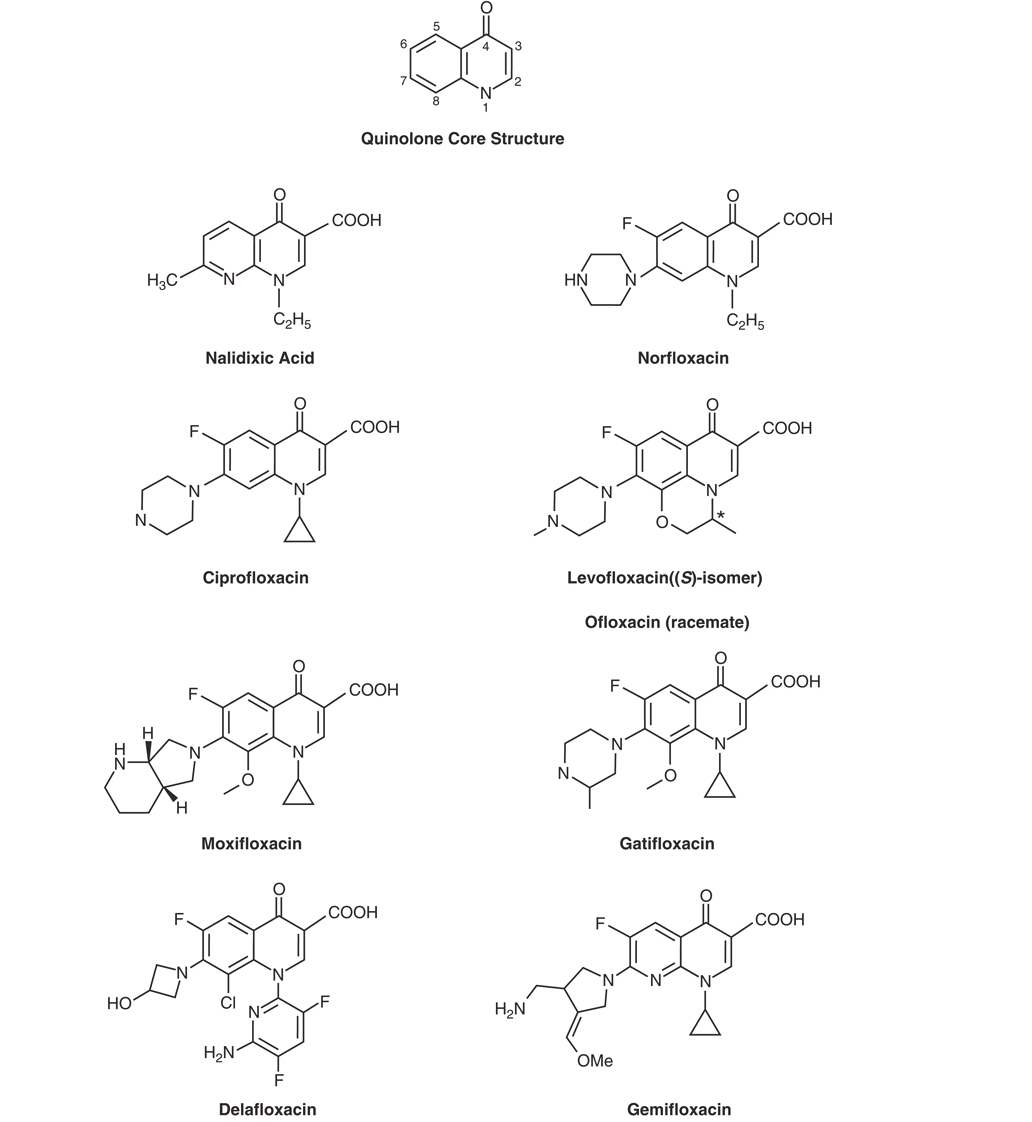
Quinolone evolution


Generation Examples Key Features
1st Nalidixic acid UTI only; narrow spectrum
2nd Norfloxacin, Ciprofloxacin Broader gram-negative; systemic use
3rd Levofloxacin Enhanced gram-positive
4th Moxifloxacin, Gemifloxacin Enhanced respiratory pathogens

Currently available quinolones


Older agents:

  • Norfloxacin
  • Ciprofloxacin
  • Ofloxacin

Newer agents:

  • Levofloxacin
  • Moxifloxacin
  • Gemifloxacin
  • Delafloxacin

Quinolone structures

Mechanism of Action

Primary targets: Topoisomerases


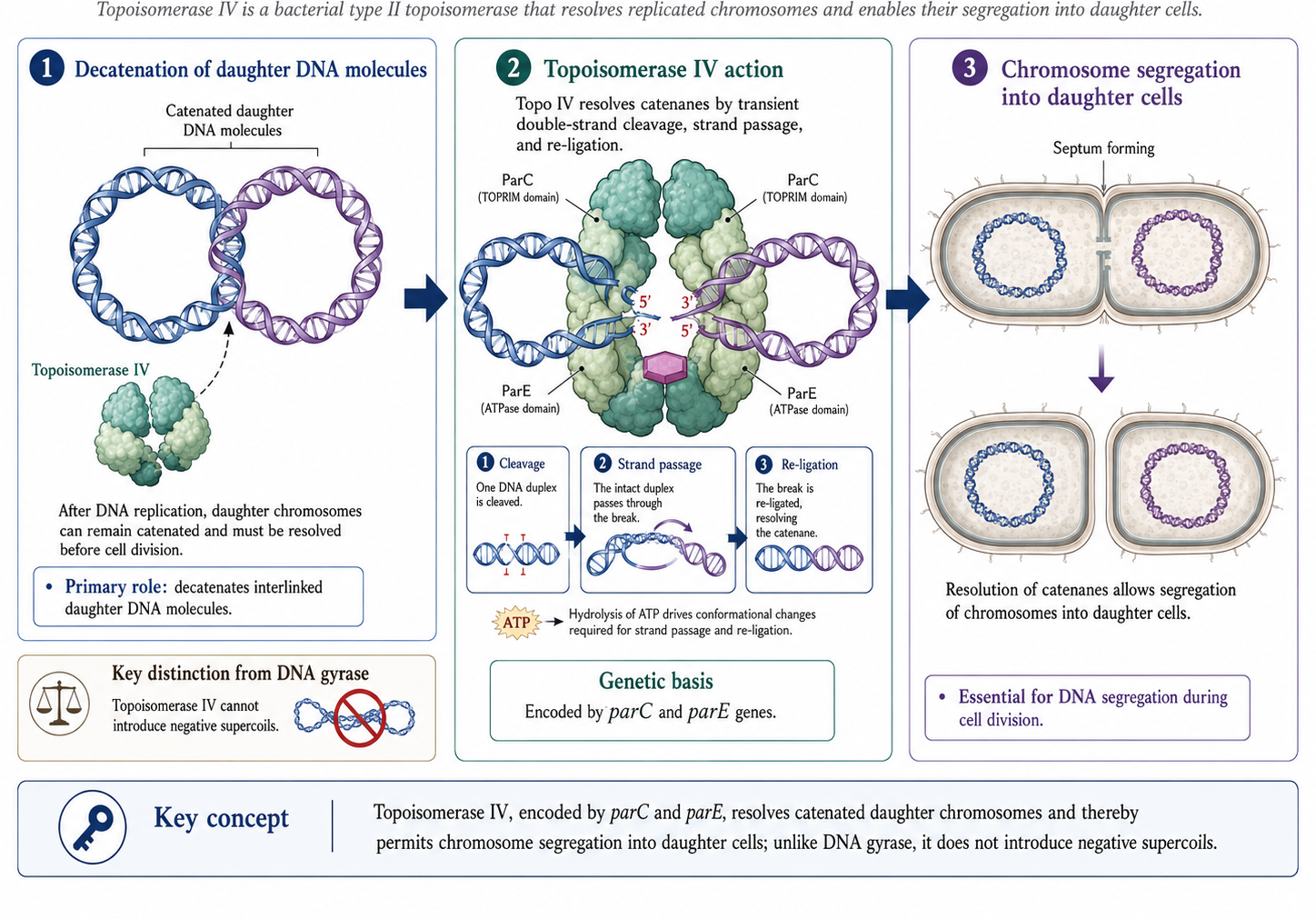
Quinolones target two essential bacterial enzymes:
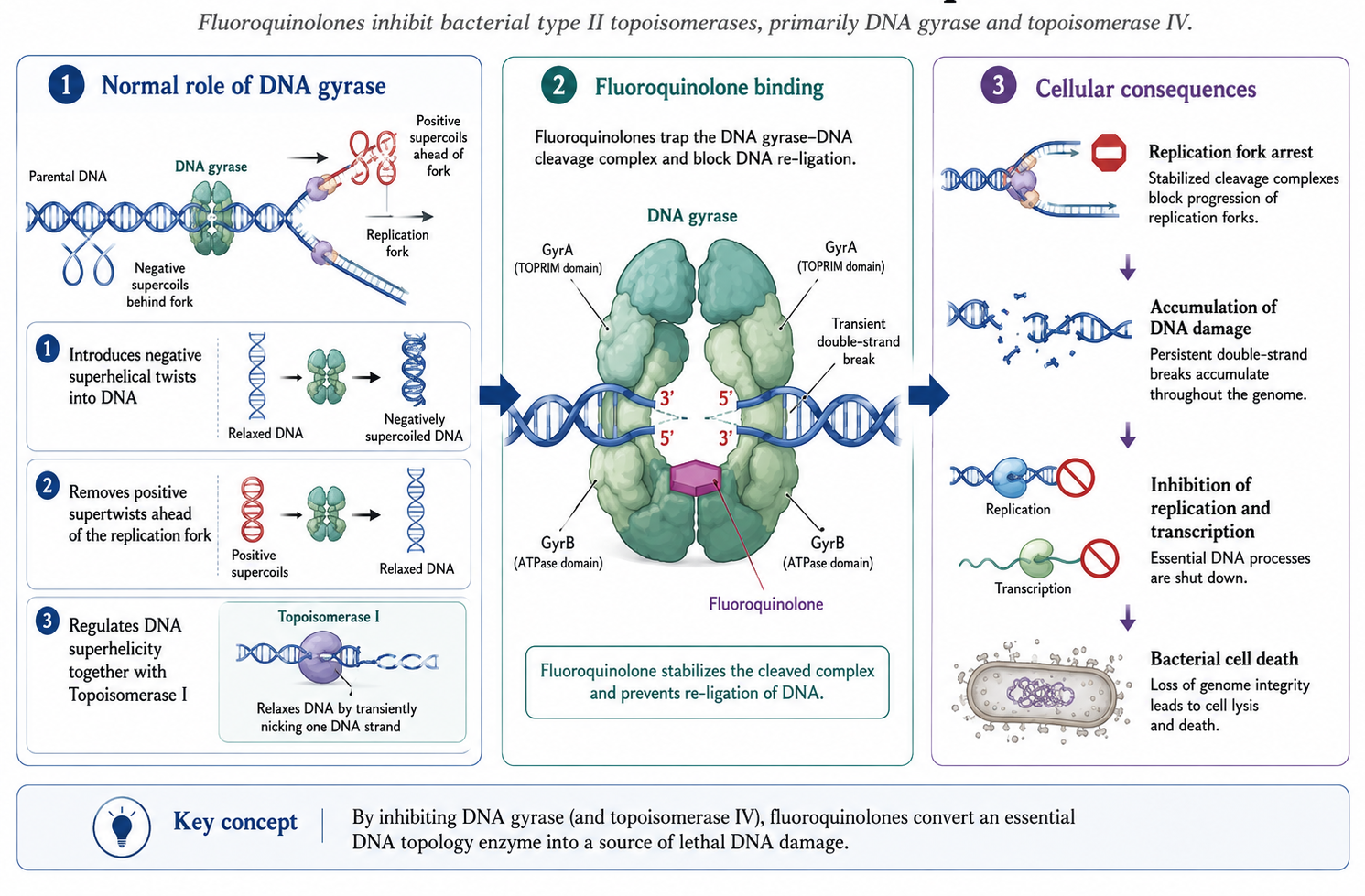
  • DNA Gyrase (GyrA, GyrB subunits)
  • Topoisomerase IV (ParC, ParE subunits)
  • Both are Type II topoisomerases required for DNA replication.

DNA gyrase function


Topoisomerase IV function

Species-dependent primary targets


Organism Type Primary Target Secondary Target
Gram-negative DNA Gyrase Topoisomerase IV
Gram-positive Topoisomerase IV DNA Gyrase


Mechanism of bacterial killing


How quinolones kill bacteria:

  1. Bind to topoisomerase-DNA complex (not enzyme alone)
  2. Block resealing of DNA double-strand breaks
  3. Stabilize covalent enzyme-DNA intermediates
  4. Create barriers to replication fork and transcription
  5. Convert to permanent DNA breaks → cell death


Bactericidal activity features


Key Point

  • Bactericidal activity increases with drug concentration
  • Maximum killing at ~30× MIC
  • Paradoxical decrease at very high concentrations


Post-antibiotic effect: 1-2 hours

Resistance Mechanisms

Overview of resistance


Quinolone resistance occurs through:

  1. Target mutations — alterations in GyrA, GyrB, ParC, ParE
  2. Efflux pumps — active drug extrusion
  3. Plasmid-mediated — qnr genes, modifying enzymes


Target mutations: QRDR


Quinolone Resistance-Determining Region (QRDR):

  • GyrA mutations cluster at amino acids 67-106
  • Most common: Serine-83 → Leucine/Tryptophan
  • Similar “hot spots” in ParC (position 80)


Stepwise resistance development


  1. First mutation in primary target enzyme
  2. Low-level resistance (8-fold MIC increase)
  3. Second mutation in secondary target
  4. High-level clinical resistance
  5. Low-level resistance (8-fold MIC increase)
  6. Second mutation in secondary target
  7. High-level clinical resistance

Warning

Serial passage selects progressively resistant mutants!


Efflux pumps: Gram-negatives


Organism Pump System Clinical Significance
E. coli AcrAB-TolC Often combined with gyrA mutations
P. aeruginosa MexAB-OprM Common in clinical isolates
P. aeruginosa MexCD-OprJ Selected by fluoroquinolone use
K. pneumoniae OqxAB-TolC Plasmid-encoded


Efflux pumps: Gram-positives


S. aureus:

  • NorA — hydrophilic quinolones (norfloxacin > ciprofloxacin > levofloxacin)
  • NorB, NorC — broader substrate range
  • MepA — MATE family pump

Tip

Moxifloxacin is not affected by NorA overexpression!


Plasmid-mediated resistance: Qnr


Qnr proteins protect topoisomerases from quinolone action:

  • Seven families: qnrA, qnrB, qnrS, qnrC, qnrD, qnrE, qnrVC
  • Found in 1-7% of Enterobacterales
  • Alone cause only low-level resistance
  • BUT: Facilitate selection of chromosomal mutations

Plasmid-mediated: Modifying enzymes


AAC(6’)-Ib-cr:

  • Variant aminoglycoside acetyltransferase
  • Acetylates piperazinyl nitrogen of ciprofloxacin/norfloxacin
  • Causes 3-4 fold MIC increase
  • Does NOT affect moxifloxacin, levofloxacin


Clinical implications of resistance


Rising Resistance

  • E. coli: 20-40% resistance in some areas…in Italy can approach 70-90%
  • P. aeruginosa: 20-30% resistance
  • N. gonorrhoeae: No longer recommended empirically
  • Salmonella: Increasing worldwide

Antimicrobial Activity

Spectrum overview


Best Activity:

  • Enterobacterales
  • Haemophilus spp.
  • Neisseria spp.
  • Moraxella catarrhalis

Variable Activity:

  • P. aeruginosa (cipro, levo)
  • Streptococci (newer agents)
  • Anaerobes (moxi, dela)

Gram-negative activity


Ciprofloxacin

Remains the most potent quinolone against gram-negative bacteria, especially P. aeruginosa


  • Only ciprofloxacin and levofloxacin suitable for Pseudomonas
  • Resistance may emerge during monotherapy for serious infections

Gram-positive activity comparison


Organism Cipro Levo Moxi Gemi Dela
MSSA 0.5 0.25 0.12 0.06 0.008
MRSA ≥32 16 4 8 0.5
S. pneumoniae 2 1 0.25 0.06 0.015
MIC90 values (μg/mL)

Respiratory pathogens


“Respiratory fluoroquinolones” have enhanced activity against:

  • Streptococcus pneumoniae
  • Legionella pneumophila
  • Mycoplasma pneumoniae
  • Chlamydia pneumoniae

Agents: levofloxacin, moxifloxacin, gemifloxacin


Anaerobic activity


Agent B. fragilis MIC90
Ciprofloxacin 4-64
Levofloxacin 2->16
Moxifloxacin 0.5-8
Delafloxacin 0.12

Note

Most quinolones have poor anaerobic activity; moxifloxacin and delafloxacin are exceptions.


Mycobacterial activity


Agent M. tuberculosis M. avium M. fortuitum
Ciprofloxacin 1 16 0.3->4
Levofloxacin 0.25-1 0.5-64 0.06-2
Moxifloxacin 0.125-0.5 0.5-16 0.06-1


Anthrax and bioterrorism


CDC Recommendations

  • Ciprofloxacin and levofloxacin recommended for anthrax prophylaxis
  • Similar efficacy to doxycycline
  • Quinolone resistance can be selected in B. anthracis

Pharmacology

Absorption characteristics


  • Bioavailability: 50-100% (most >70%)
  • Peak levels: 1-3 hours post-dose
  • Food delays but doesn’t significantly reduce absorption
  • Enteral feeding may reduce absorption


Peak serum concentrations


Quinolone Dose (mg) Cmax (μg/mL)
Norfloxacin 400 PO 1.5
Ciprofloxacin 500 PO 2.4
Ofloxacin 400 PO 4.6
Levofloxacin 500 PO 5.7
Moxifloxacin 400 PO 4.3
Delafloxacin 450 PO 7.45


Tissue distribution


Concentrations exceeding serum levels:

Site Fold Increase
Feces 100-1000×
Macrophages/Neutrophils 2->100×
Bile 2-20×
Lung tissue 1.6-6×
Prostate tissue 0.9-2.3×


CSF penetration


Warning

CSF penetration is generally LOW without meningeal inflammation

  • Better than β-lactams in uninflamed meninges
  • Levofloxacin ≈ Moxifloxacin > Ciprofloxacin
  • Active efflux may limit CNS concentrations


Elimination routes


Primarily Renal:

  • Ofloxacin
  • Levofloxacin

Requires dose adjustment in renal impairment

Primarily Hepatic:

  • Moxifloxacin
  • Nalidixic acid

No renal dose adjustment

Renal dosing adjustments


Agent CrCl 10-50 CrCl <10
Norfloxacin q24h q24h
Ciprofloxacin q18h q24h
Ofloxacin q24h ½ dose q24h
Levofloxacin ½ dose q24h ½ dose q48h
Moxifloxacin No change No change


Drug interactions: Cations


Critical interaction

Aluminum, magnesium, calcium, iron, and zinc form poorly absorbed chelates with quinolones.

Timing: Take quinolone 2 hours before or 2-6 hours after these agents

Drug interaction: CYP1A2


Ciprofloxacin inhibits CYP1A2:

Drug Effect
Theophylline 30% ↓ clearance; monitor levels
Caffeine ↑ levels
Tizanidine ↑ CNS/hypotensive effects; AVOID
Clozapine ↑ levels; monitor

Note

Other quinolones have minimal CYP1A2 effects
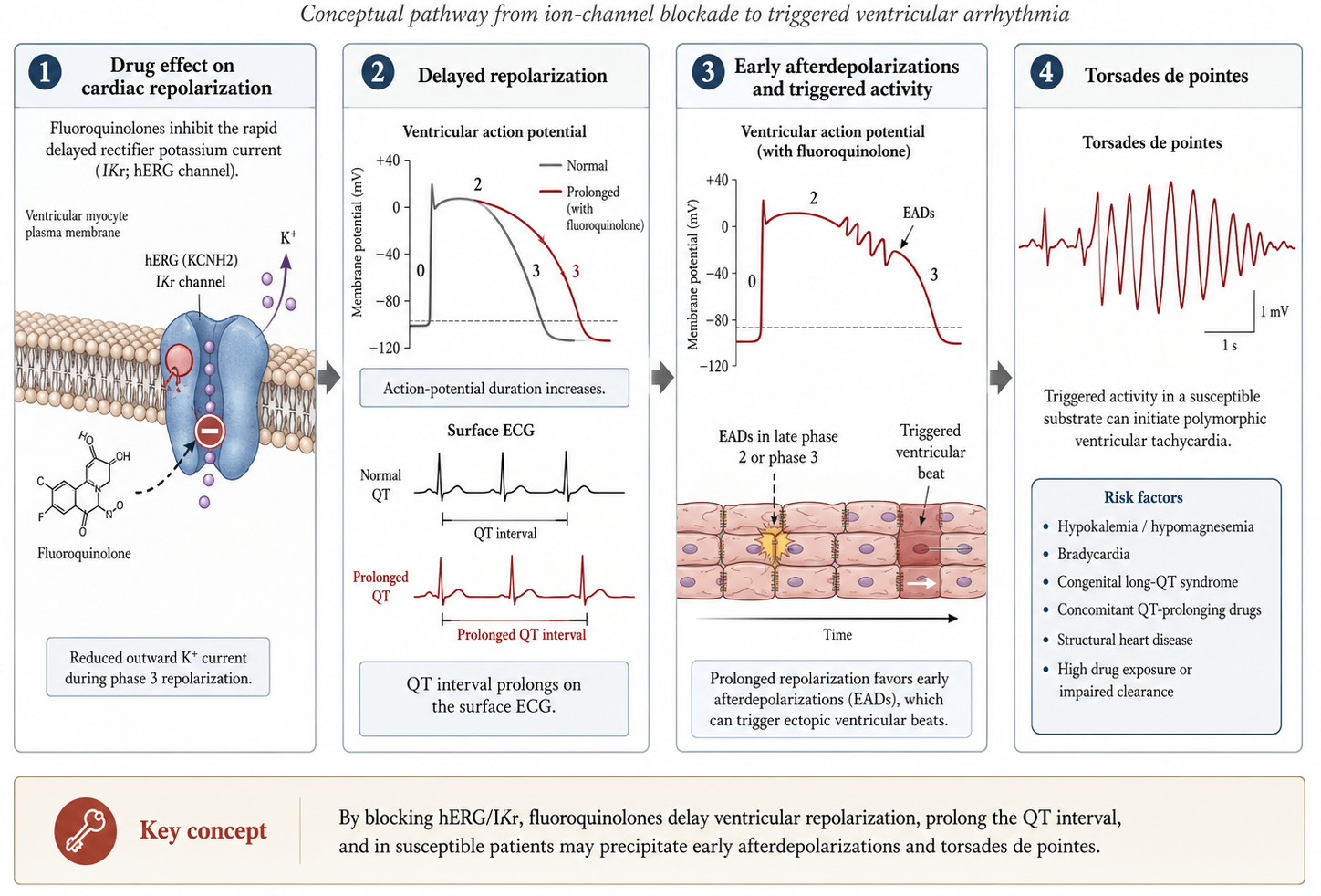


Drug interactions: QT prolongation

Drug interactions: QT prolongation


Warning

Avoid combining with other QT-prolonging agents:

  • Antiarrhythmics (Class IA, III)
  • Antipsychotics
  • TCAs
  • Macrolides
  • Azole antifungals

Risk: Moxifloxacin > Levofloxacin > Ciprofloxacin

Clinical Applications

Urinary tract infections


Uncomplicated cystitis (3-day course):

  • 81-96% cure rates
  • Comparable to TMP-SMX, nitrofurantoin
  • BUT: Not recommended first-line due to collateral damage

Warning

Reserve for patients with contraindications to first-line agents

Complicated UTIs and pyelonephritis


  • 7-14 day treatment duration
  • Ciprofloxacin, levofloxacin: 95% eradication rates
  • Good coverage of resistant gram-negatives
  • Oral bioequivalent to IV for most patients

Prostatitis


First-line for chronic bacterial prostatitis

  • Excellent prostatic penetration
  • Treatment duration: 4-6 weeks
  • Ciprofloxacin or levofloxacin preferred

Sexually transmitted infections


NO longer recommended for empirical gonorrhea treatment!

  • High resistance rates (>30% in many areas)
  • Use only if susceptibility confirmed
  • Still effective for Chlamydia and M. genitalium

Gastrointestinal Infections


Indication Agent Duration
Shigellosis Ciprofloxacin 3 days
Traveler’s diarrhea Ciprofloxacin 1-3 days
Typhoid (susceptible) Ciprofloxacin 5-7 days
Severe Salmonella Ciprofloxacin 7-14 days

Warning

Watch for resistance in Salmonella from South/Southeast Asia

Community-acquired pneumonia


“Respiratory fluoroquinolones” provide:

  • Coverage of S. pneumoniae (including drug-resistant)
  • Activity against atypical pathogens
  • Single-agent monotherapy option
  • Oral or IV options

CAP: When to use quinolones


IDSA/ATS Guidelines

Consider respiratory fluoroquinolones for CAP in:

  • Patients with comorbidities (COPD, diabetes, renal/hepatic disease)
  • Recent antibiotic use (past 3 months)
  • Penicillin allergy
  • High local macrolide resistance

Hospital-acquired pneumonia


  • Ciprofloxacin or levofloxacin may be used
  • Usually part of combination regimen
  • Important for Pseudomonas coverage
  • Consider local resistance patterns

Skin and Soft Tissue Infections


Delafloxacin — newest quinolone:

  • FDA-approved for acute bacterial SSTI
  • Active against MRSA (MIC90 0.5)
  • Weakly acidic — enhanced activity in abscesses
  • Low resistance selection potential

Bone and joint infections


Advantages of quinolones:

  • Good bone penetration
  • Excellent oral bioavailability
  • Allows IV → oral transition
  • Activity against common pathogens


Note

Consider combination with rifampin for staphylococcal infections

Mycobacterial Infections


Tuberculosis:

  • Moxifloxacin, levofloxacin in MDR-TB regimens
  • NOT recommended for treatment shortening in drug-sensitive TB
  • Did not improve outcomes in tuberculous meningitis

NTM:

  • Variable activity by species
  • Best against M. fortuitum, M. kansasii

Adverse Effects

Overview of safety concerns


FDA Black Box Warnings

  1. Tendinitis and tendon rupture
  2. Peripheral neuropathy
  3. CNS effects
  4. Exacerbation of myasthenia gravis
  5. C. difficile-associated diarrhea

GI Adverse Effects


Most common adverse effects (1-5%):

  • Nausea
  • Vomiting
  • Diarrhea
  • Abdominal discomfort

Warning

Associated with C. difficile outbreaks (NAP1/BI/027 strain)

CNS Adverse Effects


Effect Frequency
Headache 1-4%
Dizziness 1-4%
Insomnia 1-2%
Restlessness 1-2%
Seizures Rare


Risk factors: High dose, renal impairment, concurrent NSAIDs

Tendinopathy


FDA Black Box Warning

  • Can occur within hours to months
  • Achilles tendon most common
  • May be bilateral
  • Can occur after stopping the drug

Risk factors:

  • Age >60 years
  • Corticosteroid use
  • Solid organ transplant
  • Renal impairment

Peripheral neuropathy


FDA Warning

  • May occur rapidly (within days)
  • May be irreversible
  • Discontinue immediately if symptoms develop

Symptoms: Pain, burning, tingling, numbness, weakness

Cardiac: QT prolongation


Relative risk by agent:

  1. Moxifloxacin — highest risk
  2. Levofloxacin — moderate risk
  3. Ciprofloxacin — lower risk


Warning

Avoid in: Long QT syndrome, uncorrected hypokalemia, concurrent QT-prolonging drugs

Dysglycemia


Both hypo- and hyperglycemia reported:

  • Gatifloxacin (withdrawn from systemic use)
  • Can occur without hypoglycemic agents
  • Mechanism not fully understood

Warning

Monitor glucose in diabetic patients

Special Populations


Pediatrics:

  • Generally avoided (cartilage concerns)
  • Ciprofloxacin approved for specific indications

Pregnancy:

  • Category C; avoid unless necessary

Myasthenia Gravis:

  • May exacerbate weakness — use with extreme caution

Clinical Pearls & Summary

When Quinolones Are Preferred


  1. Chronic bacterial prostatitis
  2. Complicated UTI/pyelonephritis (resistant organisms)
  3. Certain bone/joint infections (oral step-down)
  4. CAP with comorbidities or recent antibiotics
  5. MDR tuberculosis (moxifloxacin)

When to avoid quinolones


  1. Uncomplicated UTI (use TMP-SMX, nitrofurantoin first)
  2. Mild community-acquired infections
  3. Empirical gonorrhea treatment
  4. Patients with tendon disorders or prior FQ tendinopathy
  5. Patients taking corticosteroids (if alternatives exist)

Key Drug Interactions to Remember


Interaction Management
Cation-containing products Separate by 2+ hours
Tizanidine Avoid with ciprofloxacin
Theophylline Monitor levels with ciprofloxacin
QT-prolonging drugs Avoid; use ciprofloxacin if necessary
Warfarin Monitor INR

Agent selection summary


Clinical Scenario Preferred Agent(s)
Pseudomonas infection Ciprofloxacin, Levofloxacin
CAP/Respiratory Levofloxacin, Moxifloxacin
SSTI (including MRSA) Delafloxacin
UTI/Prostatitis Ciprofloxacin, Levofloxacin
Renal impairment Moxifloxacin
Cardiac risk Ciprofloxacin
Anaerobic coverage needed Moxifloxacin

Take-home points


  1. Dual topoisomerase targets, but resistance develops stepwise
  2. Ciprofloxacin = best gram-negative; newer agents = better gram-positive
  3. Excellent oral bioavailability enables IV-to-oral switch
  4. Watch for cation interactions affecting absorption
  5. Serious adverse effects limit use for mild infections
  6. Reserve for appropriate indications (stewardship)

Appendix: Tables

MIC Table: Gram-Negative Pathogens


Organism Cipro Levo Moxi
E. coli 0.25 0.5 0.25
K. pneumoniae 0.5 0.5 1
P. aeruginosa 0.25-2 0.5-2 4-8
H. influenzae ≤0.03 0.03 0.03
M. catarrhalis ≤0.015 ≤0.03 ≤0.015
MIC90 values (μg/mL); resistance not shown

MIC Table: Atypical pathogens


Organism Cipro Levo Moxi
Legionella spp. 0.016-0.06 0.016-0.03 0.06
M. pneumoniae 0.5-4 0.5-2.5 0.12-0.3
C. pneumoniae 2 0.5-1 0.06-1
C. trachomatis 0.5-2 0.25-0.5 0.06
MIC values (μg/mL)

Dosing reference card


Agent Standard Dose Renal Adjustment
Ciprofloxacin 500 mg PO q12h ↓ if CrCl <30
Ciprofloxacin 400 mg IV q12h ↓ if CrCl <30
Levofloxacin 750 mg PO/IV daily ↓ if CrCl <50
Moxifloxacin 400 mg PO/IV daily None needed
Delafloxacin 450 mg PO q12h ↓ if CrCl <30

References

Berbari EF, Kanj SS, Kowalski TJ, et al. 2015 infectious diseases society of america (IDSA) clinical practice guidelines for the diagnosis and treatment of native vertebral osteomyelitis in adults. Clin Infect Dis 2015;61:e26–46.
Domagala JM. Structure-activity and structure-side-effect relationships for the quinolone antibacterials. J Antimicrob Chemother 1994;33:685–706.
Drlica K, Hooper DC. Mechanisms of quinolone action. In: Hooper DC, Rubinstein E, editors. Quinolone antimicrobial agents. 3rd ed., Washington, D.C.: ASM Press; 2003, p. 19–40.
Drlica K, Zhao XL. DNA gyrase, topoisomerase IV, and the 4-quinolones. Microbiol Rev 1997;61:377–92.
Dudley MN. Pharmacokinetics of fluoroquinolones. In: Hooper DC, Rubinstein E, editors. Quinolone antimicrobial agents. 3rd ed., Washington, D.C.: ASM Press; 2003, p. 115–32.
Eliopoulos CT, Eliopoulos GM. Activity in vitro of the quinolones. In: Hooper DC, Rubinstein E, editors. Quinolone antimicrobial agents. 3rd ed., Washington, D.C.: ASM Press; 2003, p. 91–111.
FDA Drug Safety Communication. FDA reinforces safety information about serious low blood sugar levels and mental health side effects with fluoroquinolone antibiotics. FDA 2018.
Gillespie SH, Crook AM, McHugh TD, et al. Four-month moxifloxacin-based regimens for drug-sensitive tuberculosis. N Engl J Med 2014;371:1577–87.
Gupta K, Hooton TM, Naber KG, et al. International clinical practice guidelines for the treatment of acute uncomplicated cystitis and pyelonephritis in women: A 2010 update by the infectious diseases society of america and the european society for microbiology and infectious diseases. Clin Infect Dis 2011;52:e103–20.
Heemskerk AD, Bang ND, Mai NT, et al. Intensified antituberculosis therapy in adults with tuberculous meningitis. N Engl J Med 2016;374:124–34.
Hooper DC, Jacoby GA. Topoisomerase inhibitors: Fluoroquinolone mechanisms of action and resistance. Cold Spring Harb Perspect Med 2016.
Hooper DC, Wolfson JS. Treatment of genitourinary tract infections with fluoroquinolones: Clinical efficacy in genital infections and adverse effects. Antimicrob Agents Chemother 1989;33:1662–7.
Hooton TM, Roberts PL, Cox ME, Stapleton AE. Voided midstream urine culture and acute cystitis in premenopausal women. N Engl J Med 2013;369:1883–91.
Jacoby GA. Mechanisms of resistance to quinolones. Clin Infect Dis 2005;41:S120–6.
Kato J, Nishimura Y, Imamura R, Niki H, Hiraga S, Suzuki H. New topoisomerase essential for chromosome segregation in e. coli. Cell 1990;63:393–404.
Kohanski MA, Dwyer DJ, Hayete B, Lawrence CA, Collins JJ. A common mechanism of cellular death induced by bactericidal antibiotics. Cell 2007;130:797–810.
Lipsky BA, Berendt AR, Deery HG, et al. Diagnosis and treatment of diabetic foot infections. Clin Infect Dis 2004;39:885–910.
Lode H, Rubinstein E. Adverse effects. In: Hooper DC, Rubinstein E, editors. Quinolone antimicrobial agents. 3rd ed., Washington, D.C.: ASM Press; 2003, p. 407–19.
Mandell LA, Wunderink RG, Anzueto A, et al. Infectious diseases society of america/american thoracic society consensus guidelines on the management of community-acquired pneumonia in adults. Clin Infect Dis 2007;44:S27–72.
Martínez-Martínez L, Pascual A, Jacoby GA. Quinolone resistance from a transferable plasmid. Lancet 1998;351:797–9.
Metlay JP, Waterer GW, Long AC, et al. Diagnosis and treatment of adults with community-acquired pneumonia. An official clinical practice guideline of the american thoracic society and infectious diseases society of america. Am J Respir Crit Care Med 2019;200:e45–67.
Naber KG, Schaeffer AJ, Hynes CF, Matsumoto T, Shoskes DA, Bjerklund Johansen TE. EAU/AUA guidelines for chronic bacterial prostatitis and chronic pelvic pain syndrome in men. Eur Urol 2008;54:764–71.
Nau R, Sorgel F, Eiffert H. Penetration of drugs through the blood-cerebrospinal fluid/blood-brain barrier for treatment of central nervous system infections. Clin Microbiol Rev 2010;23:858–83.
Piddock LJV. Clinically relevant chromosomally encoded multidrug resistance efflux pumps in bacteria. Clin Microbiol Rev 2006;19:382–402.
Poole K. Efflux-mediated resistance to fluoroquinolones in gram-negative bacteria. Antimicrob Agents Chemother 2000;44:2233–41.
Radandt JM, Marchbanks CR, Dudley MN. Interactions of fluoroquinolones with other drugs: Mechanisms, variability, clinical significance, and management. Clin Infect Dis, vol. 14, 1992, p. 272–84.
Robicsek A, Strahilevitz J, Jacoby GA, et al. Fluoroquinolone modifying enzyme: A novel adaptation of a common aminoglycoside acetyltransferase. Nature Medicine 2006;12:83–8.
Stahlmann R, Lode HM. Risks associated with the therapeutic use of fluoroquinolones. Expert Opin Drug Saf 2013;12:497–505.
Strahilevitz J, Jacoby GA, Hooper DC, Robicsek A. Plasmid-mediated quinolone resistance: A multifaceted threat. Clin Microbiol Rev 2009;22:664–89.
Tran JH, Jacoby GA. Mechanism of plasmid-mediated quinolone resistance. Proc Natl Acad Sci USA 2002;99:5638–42.
Wang JC. DNA topoisomerases. Annu Rev Biochem 1996;65:635–92.
Wolfson JS, Hooper DC. Fluoroquinolone antimicrobial agents. Clin Microbiol Rev 1989;2:378–424.
Yap YG, Camm AJ. QT prolongation with quinolone antimicrobial agents. In: Hooper DC, Rubinstein E, editors. Quinolone antimicrobial agents. 3rd ed., Washington, D.C.: ASM Press; 2003, p. 421–40.