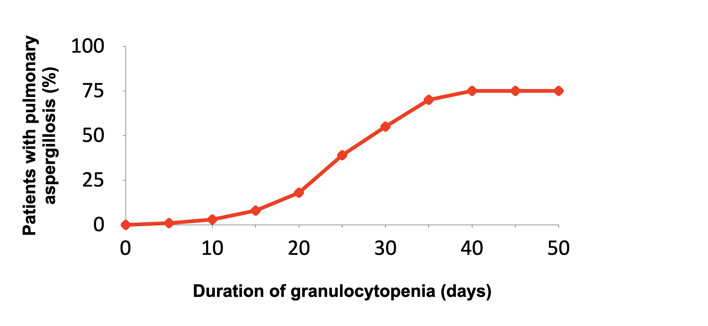
What are the most common infections associated with short versus prolonged neutropenia?
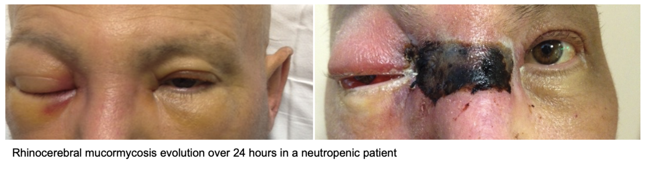
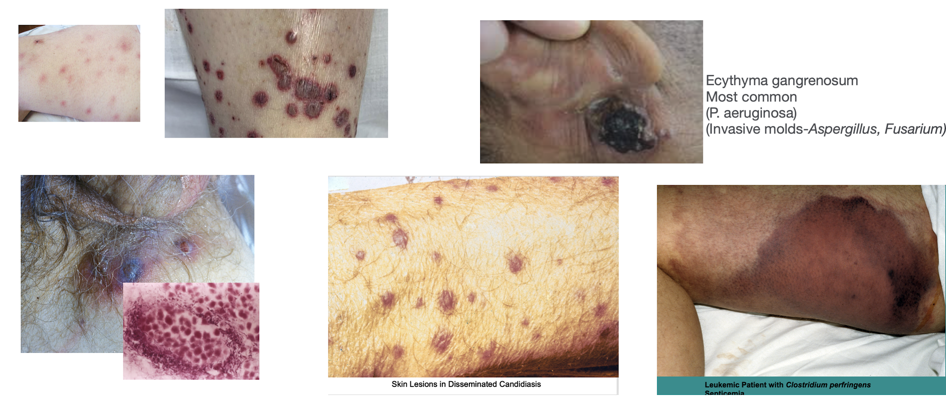
How does the presentation of skin, mucocutaneous lesions, abdominal pain or pneumonia change the infection differential diagnosis?
What are common empiric antimicrobial regimens used to treat patients while awaiting diagnostic results?
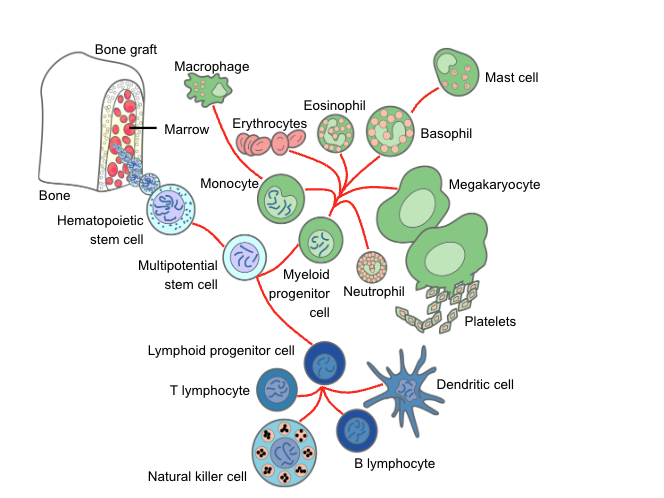
Myeloid lineage (neutrophils / platelets)
Lymphoid lineage (T, B, NK cells)
Antineoplastic chemotherapy impairs proliferation of normal hematopoietic progenitor cells
Obliteration of the mitotic pool
Depletion of the marrow reserve
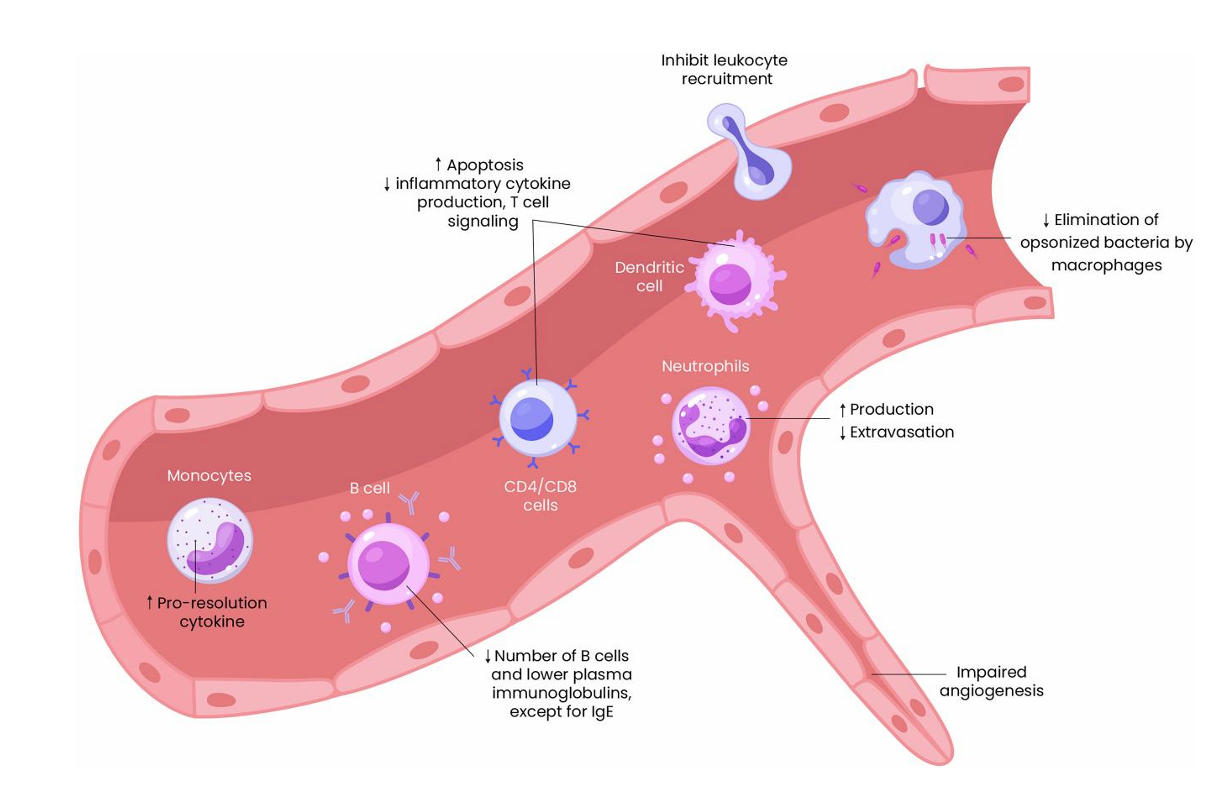
Antineoplastic drugs, glucocorticoids and irradiation also interfere with the function of non-proliferating granulocytes, resulting in:
Decreased chemotaxis
Diminished phagocytic capacity
Defective intracellular killing
| Cells | Molecules | Active against |
|---|---|---|
PMNs
|
|
Bacteria, fungi |
| Macrophages |
|
Intracellular pathogens (depletes arginine) |
| Eosinophils |
|
Worms (extracellular) |
| Natural killing (NK) cells |
|
Viral or bacterial infected cells |
| Disease | Risk Level |
|---|---|
| Acute myeloid leukemia | Highest |
| High-risk ALL, Relapsing leukemia | High |
| Low-risk ALL, CLL, Myeloma | Moderate |
| Non-Hodgkin lymphoma | Lower |
| Solid tumors | Lowest |
| Signs and Symptoms | <100 | 101-1000 | >1000 |
| Fever | 98 | 90 | 76 |
| Fluctuance | 6 | 36 | 52 |
| Fissure or ulceration | 21 | 42 | 54 |
| Exudate | 11 | 64 | 91 |
| Purulent sputum | 8 | 67 | 84 |
| Pyuria | 11 | 63 | 97 |
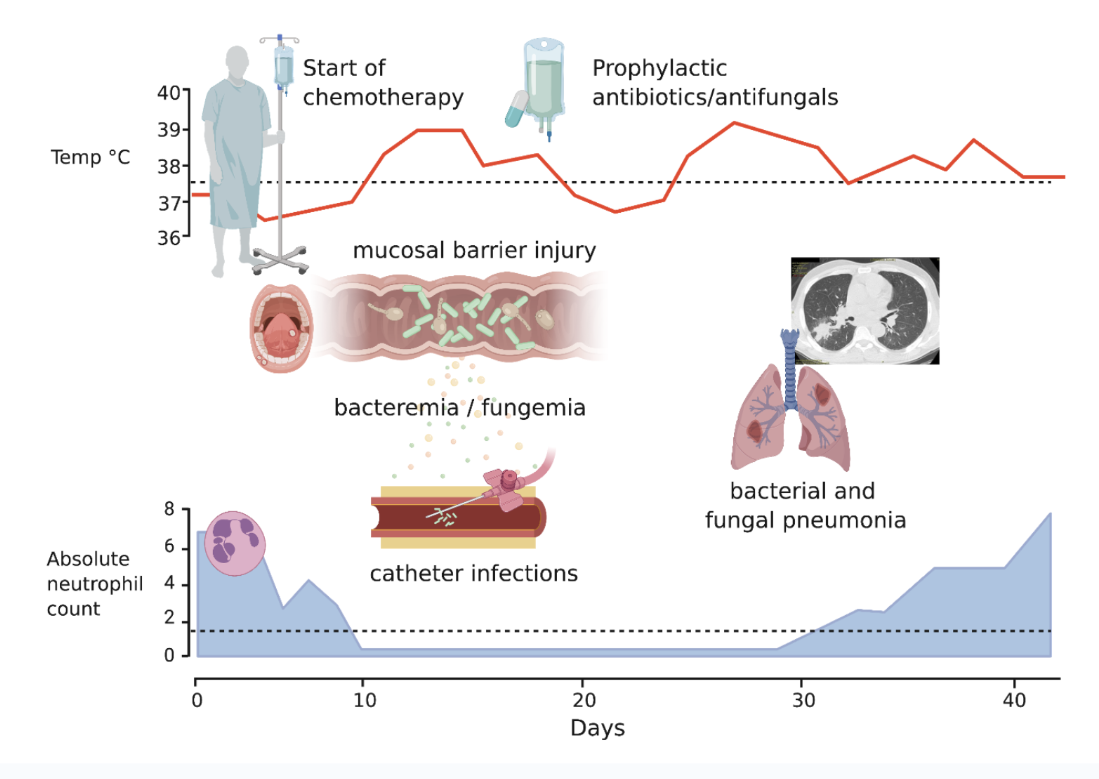
Phase I (1-10 days)
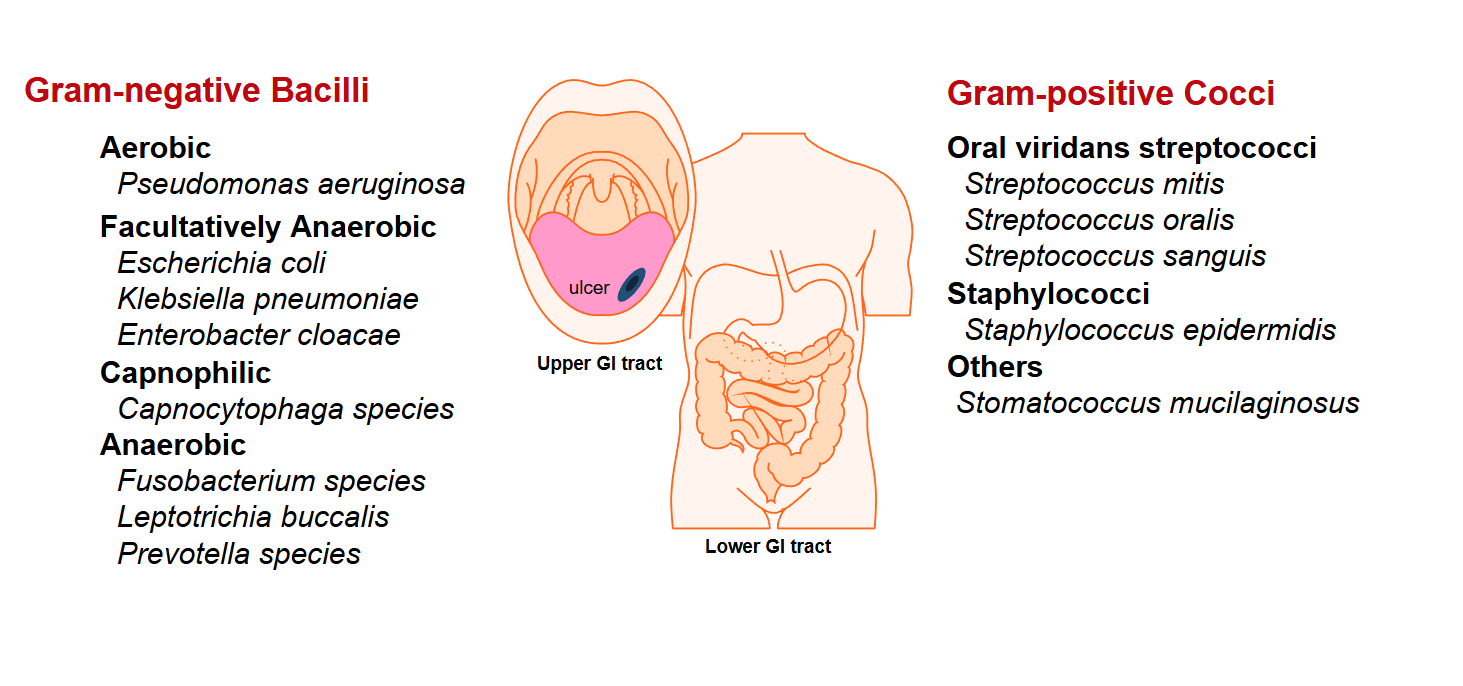
CONS - Staphylococcus spp.
Enterobacterales
Viridans streptococci
Anaerobes
Enterococcus
Clostroides diffile
Herpes simplex
+/- Candida spp.
Phase II (10-27 days)
Phase I pathogens plus
Methicillin-resistant S. aures (MRSA)
Vancomycin-resistant Enterococcus (VRE)
Resistant gram-negative bacteria
Stenotrophomonas maltophilia
Phase III (> 27 days)
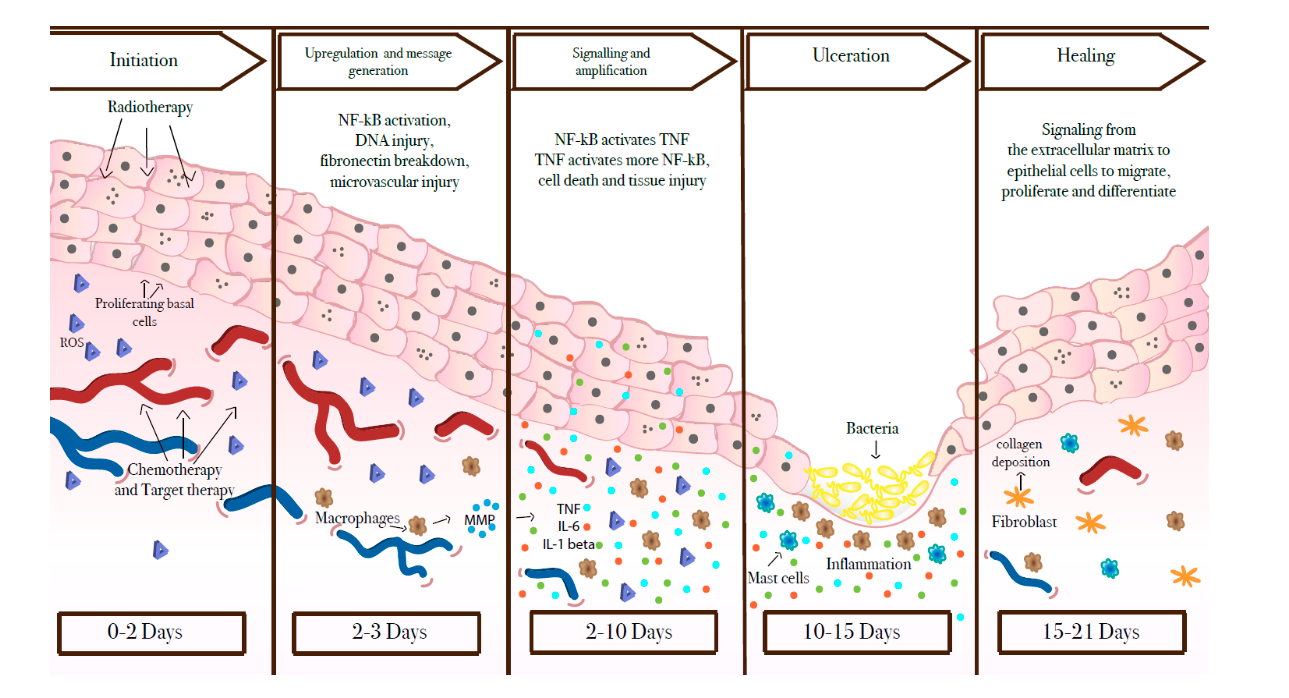
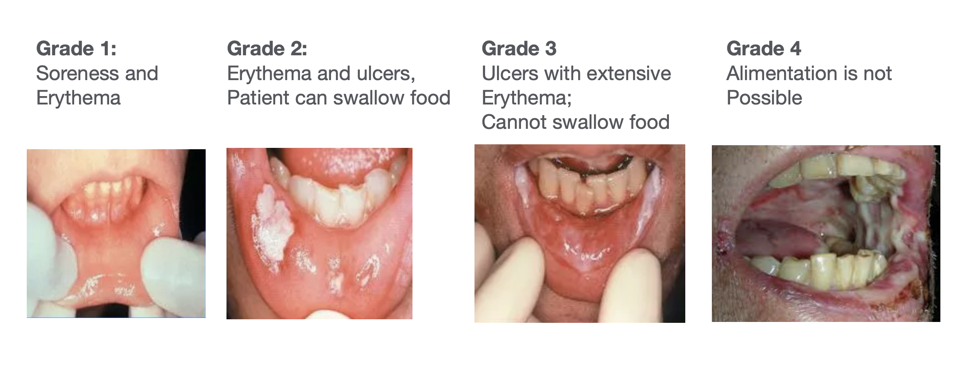
Mucositis - Barrier disruption, translocation
Central venous catheters - Entry point for pathogens
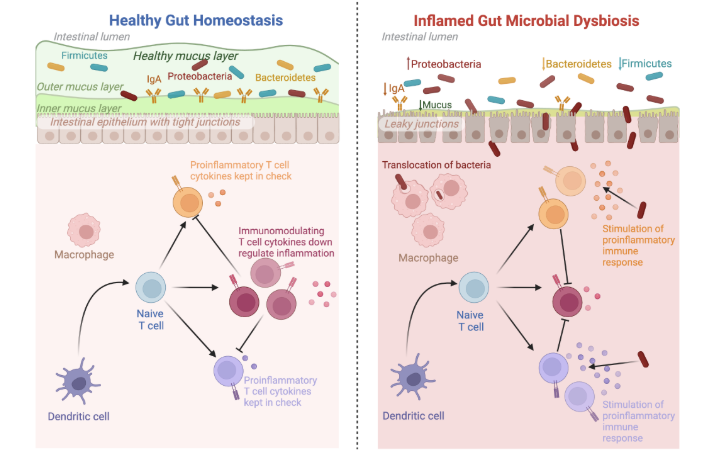
Microbiome alterations - Chemotherapy-induced dysbiosis
Immunosuppressive drugs - T-cell depletion
Biologic agents - Targeted immune effects
| Catheter Type | Per 100 devices | Per 1000 catheter-days | |
|---|---|---|---|
| Hickman/Broviac | 22.5 | 1.6 | |
| Port-a-cath | 3.5-4 | 0.1 | |
| PICC | 3.1 | 1.1 |
| Agent | Key Infections |
|---|---|
| Rituximab | HBV reactivation, PML |
| Brentuximab | PCP, PML |
| Bortezomib | VZV reactivation |
| Ruxolitinib | VZV, TB |
| Idelalisib | HSV, CMV, PCP |
| Ibrutinib | IFD (with steroids) |
:
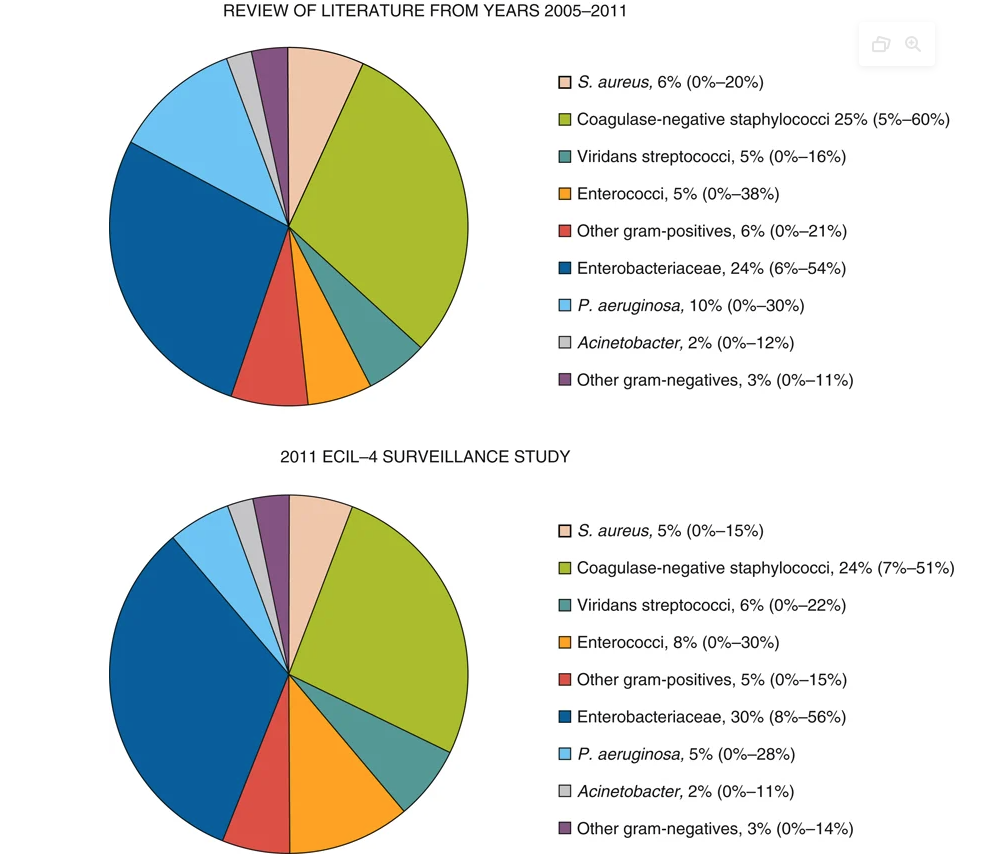
Historical trend:
Current ratio (ECIL-4 surveillance):
Gram-negative:
Gram-positive:
Most Common:
Emerging concerns:
| Population | Incidence |
|---|---|
| Acute myelogenous leukemia (induction) | 7.9% |
| Acute lymphocytic leukemia (adults) | 4.3-11.7% |
| Chronic myelogenous leukemia | 2.3% |
| Chronic lymphocytic leukemia, lymphoma, myeloma |
<1% |
| Autologous HSCT | 0.3-2% |
| Allogeneic HSCT | 8-15% |
Herpes viruses:
Respiratory viruses:
Fluoroquinolone prophylaxis:
| Pros | Cons |
|---|---|
| Reduces febrile episodes | Increasing resistance, especially selection of ESBL |
| Reduces BSI | No mortality benefit (recent data) |
| Oral administration | Drug interactions |
| QT prolongation, tendinopathy |
Current status: Controversial; some guidelines no longer recommend especially in centeres with high levels of resistance
When to use mold-active prophylaxis:
Posaconazole:
| Agent | Dose | Indication |
|---|---|---|
| Fluconazole | 400 mg daily | Candidiasis risk only |
| Posaconazole tablets | 300 mg BID day 1, then 300 mg daily | AML/MDS/ BMT |
| Voriconazole | 200 mg BID | Alternative (TDM needed) |
| Isavuconazole | 200 mg daily (after loading) | Alternative, not “approved” for prophylaxis indication |
Problem: Drug interactions with agents metabolized through CYP3A4. Interactions are less severe with fluconazole and isavuconazole (weak CYP3A4 inhibitors) vs. posaconazole and voriconazole (strong CYP3A4 inhibitors)
Indications:
First-line: TMP-SMX 160/800 mg 3×/week
Alternatives: Dapsone, atovaquone, aerosolized pentamidine
HSV/VZV:
HBV:
| Vaccine | Timing | Notes |
|---|---|---|
| Influenza | Annual | Avoid during intensive chemo |
| Pneumococcal (PCV) | Before chemo if possible | Better response than PPSV23 |
| SARS-CoV-2 | 3-dose primary + boosters | All patients and contacts |
| Herpes zoster (RZV) | VZV seropositive | Inactivated vaccine |
For starting empirical antibiotics:
Also treat infection suspected with:
| Variable | Points |
|---|---|
| Burden of illness: none/mild | 5 |
| Burden of illness: moderate | 3 |
| No hypotension | 5 |
| No COPD | 4 |
| Solid tumor/no prior fungal infection | 4 |
| Outpatient status | 3 |
| No dehydration | 3 |
| Age <60 years | 2 |
| Variable | Points |
|---|---|
| ECOG PS ≥2 | 2 |
| Hyperglycemia stress | 2 |
| COPD | 1 |
| Cardiovascular disease | 1 |
| Mucositis grade ≥2 | 1 |
| Monocytes <200/µL | 1 |
Two main approaches:
Escalation:
De-escalation:
Day 0:
Day 2-4 (if needed):
Day 0:
Day 2-4:
| Drug | Adult Dose | Administration | When |
|---|---|---|---|
| Piperacillin-tazobactam | 4.5 g q6-8h | Extended/continuous infusion | Low risk of ESBL |
| Cefepime | 2 g q8h | Extended infusion | Low risk of ESBL- active at lower inoculum |
| Meropenem | 1-2 g q8h | Extended infusion (3-6h) | Higher risk of ESBL |
| Ceftazidime-avibactam | 2.5 g q8h | 2-hour infusion | Higher risk of KPC carbapenemase |
| Ceftolozane-tazobactam | 1.5-3 g q8h | 1-hour infusion | Higher risk of MDR P. aeruginosa |
Add vancomycin or alternative for:
Stop after 48-72h if no gram-positive pathogen identified
For FUO:
For documented infection:
Empirical:
Diagnostic-driven:
GM -galactomannan ELISA test, BDG- β-D-glucan
| Test | Target | Specimen |
|---|---|---|
| Galactomannan (GM) | Aspergillus | Serum, BAL |
| β-D-glucan (BDG) | Broad fungi (not Mucorales) | Serum |
| PCR | Species-specific | Blood, BAL |
| CT imaging | Structural changes | Chest/sinuses |
| Indication | First-line |
|---|---|
| Invasive aspergillosis | Voriconazole or isavuconazole |
| Mucormycosis | Liposomal amphotericin B |
| Candidemia | Echinocandin |
| Empirical therapy | Liposomal amphotericin B or caspofungin |
Management depends on:
Catheter removal indicated for:
Candida- Thrush, esophagitis (odynophagia, retrosternal pain)
Vesicular lesions- painful grouped lesions→ulceration
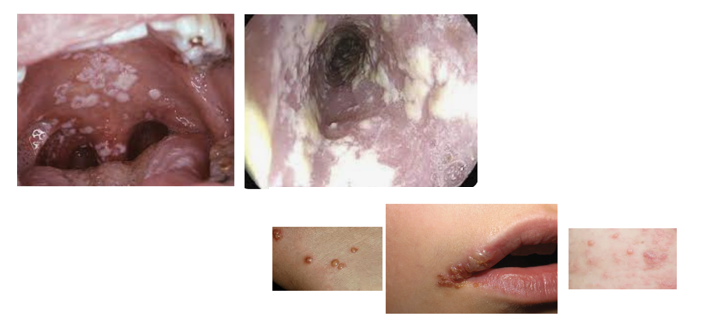
Disseminated HSV- widespread vesicular rash , hepatitis (↑ AST/ALT, sometimes severe), pneumonitis
Key features:
Management:
First-line treatment: Reduce unnecessary antibiotics →oral vancomycin 125 mg QID for 10 days or fidaxomicin 200 mg BID for 10 days
Fulminant disease: Oral vancomycin 500 mg QID (or via NG tube) combined with IV metronidazole 500 mg TID; →consider rectal vancomycin instillation if ileus is present
Ongoing/worsening CDI: Fidaxomicin if initially treated with vancomycin→ fecal microbiota transplant (if not neutropenic)
CDI resolved but at risk of recurrence: Consider continuing vancomycin or fidaxomicin if diarrhea recurs, and prophylactic vancomycin during subsequent antibiotic courses → taper regimens fecal transplant (not neutropenic) or bezlotoxumab
Documented infection: Treat for the appropriate duration based on the specific pathogen and site (see relevant guidelines)
Fever resolved, unknown origin, ANC ≥500: Discontinue empiric antibiotics.
Fever resolved, unknown origin, ANC <500: Options include discontinuing therapy, de-escalating to prophylaxis, or continuing the current regimen until neutropenia resolves.
Not responding/clinically worsening: Broaden antimicrobial coverage based on clinical and microbiologic data, obtain imaging, consider adding G-CSF, and obtain ID consultation.
Persistent fever ≥4 days on empiric antibiotics: Consider adding antifungal therapy with anti-mold activity; duration guided by clinical course, neutrophil recovery
Requires multidisciplinary collaboration